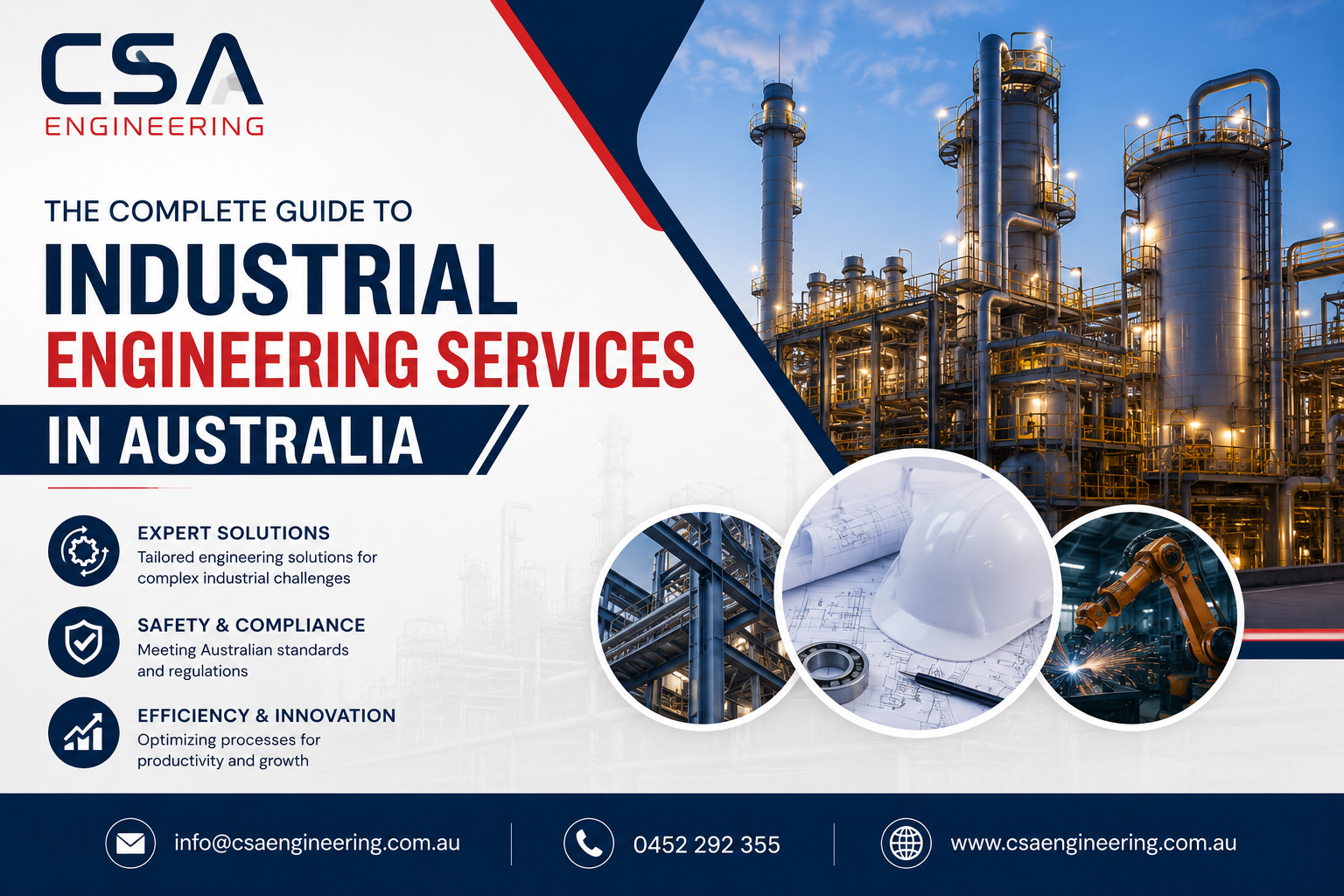
Introduction
Industrial facilities across Australia, from processing plants and mining sites to manufacturing floors and bulk material handling operations, depend on engineering that is technically sound, fully compliant, and built to perform under real operating conditions. Industrial engineering services in Australia cover a wide scope of work, spanning design, certification, inspection, and ongoing compliance support for equipment and structures that carry significant safety and regulatory obligations. Getting this engineering wrong does not just create inconvenience; it can lead to failed audits, unsafe equipment remaining in service, and costly downtime while problems are corrected after the fact. Getting it right means facilities that operate safely, pass regulatory scrutiny without friction, and continue performing reliably for the life of the asset.
CSA Engineering has worked across Australia’s most demanding industrial sectors, delivering design and certification outcomes for clients in mining, manufacturing, energy, and bulk material handling. This guide brings that experience together into a complete overview of what industrial engineering services actually involve, why each component matters, and what to look for when engaging a provider.
What Are Industrial Engineering Services?
Industrial engineering services refer to the design, verification, and certification work required to make industrial equipment, plant, and structures safe, compliant, and fit for purpose. This includes everything from the structural design of a process plant to the certification of a single lifting device. Unlike general structural or building engineering, industrial engineering deals with equipment and systems operating under continuous mechanical, thermal, or pressure loads, which means the margin for error is smaller and the regulatory requirements are more specific. A qualified provider of Industrial Design & Certification services understands both the technical demands of industrial equipment and the Australian Standards that govern it.
Core Areas of Industrial Engineering
Process Plant Design
Process plants, whether for chemical processing, distillation, water treatment, or manufacturing, require engineering that accounts for fluid dynamics, material compatibility, structural loads, and operational safety simultaneously. Process Plant Design work typically involves detailed layout planning, structural support design, and integration with existing site infrastructure, all while meeting the compliance requirements of the relevant state regulator. Getting this stage right at the design phase avoids costly rework once construction or installation is underway.
Pressure Vessel Certification
Pressure vessels are among the highest-risk assets in Australian industry, and their certification is tightly regulated for good reason. A vessel operating outside its certified parameters, or one that has never been properly assessed, poses a direct risk to workers and nearby infrastructure. Pressure Vessel Certification confirms that a vessel has been designed, fabricated, and maintained in line with AS 1210 and related standards, and it is a non-negotiable requirement before any pressure equipment can legally remain in service.
Lifting Devices and Platform Certification
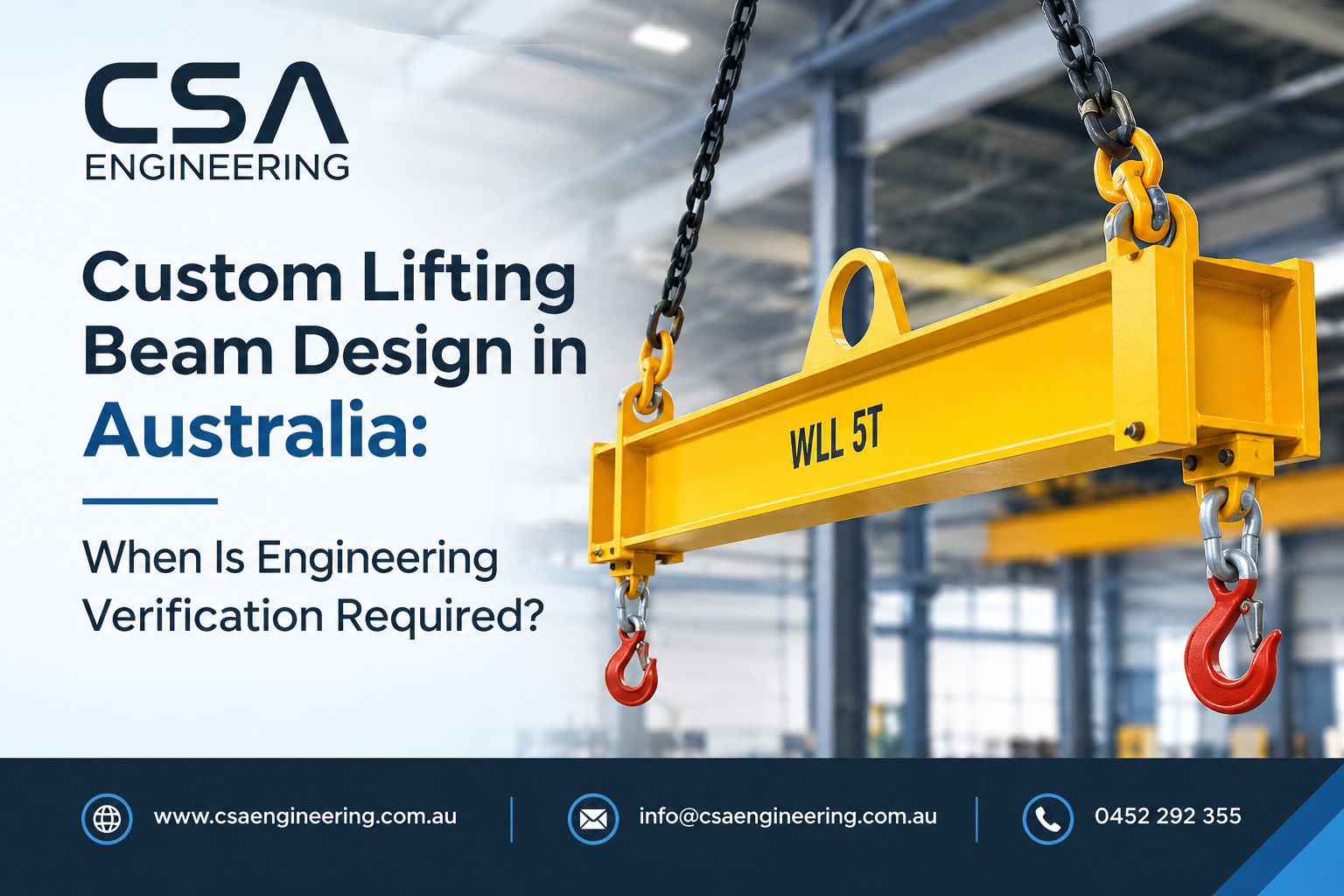
Cranes, hoists, work platforms, and other lifting equipment require certification that verifies structural integrity, load ratings, and operational safety under the conditions they will actually face on site. Lifting Devices Certification covers the inspection and sign-off process that keeps this equipment compliant with Australian workplace safety legislation, while platform design and certification services extend the same rigour to elevated work platforms and access structures used across industrial sites.
Conveyor Design
Bulk material handling operations rely heavily on conveyor systems, and the engineering behind them needs to account for load capacity, structural fatigue, and integration with surrounding plant. Conveyor design services ensure that these systems are engineered to handle real-world throughput demands without premature wear or structural failure, which is particularly critical in mining and bulk handling environments where conveyors run continuously under heavy load.
Why Compliance Is Central to Industrial Engineering
Every component of industrial engineering, from initial design through to final certification, exists within a framework of Australian Standards and state-based regulatory requirements. Compliance is not an administrative formality layered on top of the engineering; it is the mechanism that confirms the engineering is fit for purpose. A facility that skips proper certification, or that engages a provider without appropriately registered engineers, carries risk that surfaces later, often at the worst possible time: during an audit, an insurance claim, or after an incident.
- Engineering sign-off must come from appropriately registered and qualified engineers
- Certification documentation must be accepted by the relevant state regulator or certifying authority
- Ongoing recertification and inspection schedules must be maintained as standards evolve
- Documentation must be consistent and defensible if challenged by a regulator or insurer
What to Look for in an Industrial Engineering Provider
Choosing the right partner for industrial engineering services in Australia comes down to a handful of factors that consistently separate reliable providers from those that simply look the part.
- Demonstrated experience with your specific type of equipment or facility, not just general engineering experience
- Registered, qualified engineers who take personal professional responsibility for certification sign-off
- The ability to manage a project end-to-end, from design through to certification and ongoing support
- A structured quality assurance process that reviews engineering outputs before they are finalised
- Recognition and registration appropriate to the states in which your operations are located
Why Businesses Across Australia Choose CSA Engineering
CSA Engineering supports industrial operators across mining, manufacturing, energy, and bulk material handling with a team of registered engineers spanning structural, mechanical, and industrial disciplines. Clients benefit from a single accountable partner for the full engineering lifecycle rather than a fragmented set of vendors handling separate pieces of the same project.
Clients who partner with CSA Engineering benefit from:
- End-to-end design and certification support under one accountable team
- RPEQ-registered engineers for Queensland projects and appropriately registered professionals in other states
- Integrated services spanning process plant, pressure vessel, lifting device, platform, and conveyor engineering
- Certification documentation accepted by Australian regulators and certifying authorities
- Ongoing compliance support that keeps facilities ahead of recertification and inspection obligations
Conclusion
Industrial engineering services in Australia cover far more ground than a single design task or a single certificate. They represent an ongoing responsibility to keep equipment, plant, and structures safe, compliant, and operationally reliable across their entire working life. Understanding the core areas of industrial engineering, and knowing what a genuinely capable provider looks like, puts businesses in a position to protect their assets, their workforce, and their regulatory standing from the outset.
CSA Engineering welcomes the opportunity to discuss your industrial engineering and certification needs, drawing on years of experience delivering compliant, practical outcomes for operators across Australia.
Also Read: Pressure Vessel Certification Australia: How to Choose the Right Engineering Partner?