Introduction
Running an industrial facility in Australia means juggling safety regulations, tight deadlines, and equipment that simply cannot fail. One overlooked detail in a pressure vessel design or a conveyor system can shut down an entire site. This is exactly why more businesses are turning to industrial engineering consultants Australia wide, rather than trying to manage complex design and certification work with limited in-house resources.
This article breaks down the real, practical benefits of bringing in an experienced consultant, what to expect from the process, and how it protects your business in the long run.
Why Industrial Facilities Need Specialist Engineering Support
Industrial sites are not one-size-fits-all. A mining operation, a manufacturing plant, and a bulk material handling facility each carry different structural loads, safety risks, and compliance obligations. Generic engineering advice rarely holds up under an audit or, worse, an incident investigation.
Specialist consultants bring sector-specific knowledge that in-house teams often do not have time to build. According to Engineers Australia, ongoing professional development and sector specialisation are central to maintaining engineering competency standards across the country, which is one reason certified consultants are held to a higher, more current standard than general contractors.
The Cost of Getting It Wrong
A poorly designed platform or an uncertified pressure vessel is not just a compliance issue. It is a safety hazard that can lead to downtime, regulatory penalties, and reputational damage. Hiring a consultant upfront is almost always cheaper than fixing a failure after the fact.
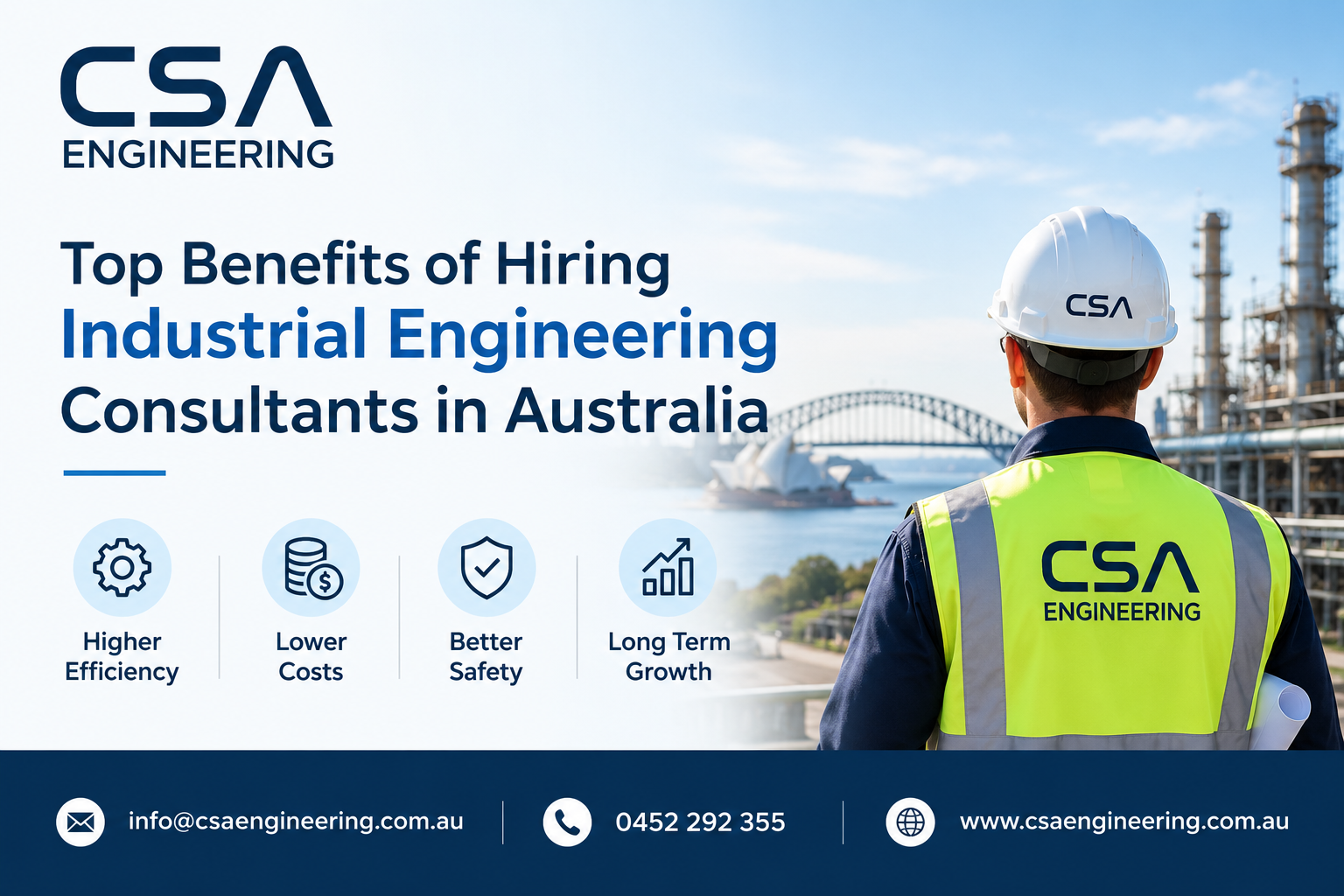
Top Benefits of Hiring Industrial Engineering Consultants
1. Access to Deep Technical Expertise
Industrial engineering consultants bring years of hands-on experience across sectors like mining, energy, and manufacturing. This means your project benefits from proven design methods rather than trial and error. Firms offering industrial design and certification services typically work across light to heavy-duty applications, so they have already solved problems similar to yours.
2. Faster Project Timelines
Because consultants have established processes, from initial assessment through to final sign-off, projects move faster. You are not waiting on a team to research standards from scratch. This is particularly true for specialised work like process plant design, where delays in design approval can push back an entire production schedule.
3. Regulatory Compliance and Certification
Every state in Australia has its own regulatory bodies and standards for industrial equipment and structures. An experienced consultant understands these requirements in detail, including how to secure pressure vessel certification without unnecessary back-and-forth with regulators. This reduces the risk of failed inspections or costly rework.
4. Reduced Operational Risk
Certified engineering reduces the chance of equipment failure, workplace injury, or unplanned shutdowns. Consultants assess site conditions and technical requirements early, identifying risks before they become expensive problems. This proactive approach is especially valuable for equipment like conveyors and lifting devices, where failure carries serious safety consequences.
5. Cost Savings Over Time
While hiring a consultant is an upfront cost, it typically saves money across the life of a project. Fewer design errors, fewer compliance breaches, and fewer emergency repairs all add up. Businesses that invest in proper conveyor design from the outset generally avoid the higher costs of retrofitting a system that was not built to standard the first time.
6. Access to a Multi-Disciplinary Team
Industrial projects often need more than one type of expertise. A single consultancy that covers structural design, certification, and automation means you are not managing multiple vendors. This kind of integrated support also makes it easier to get platform design and certification handled alongside other structural work on the same site.
7. Long-Term Partnership and Support
The best consultants do not disappear after handing over a certificate. They provide ongoing support as your facility grows, equipment ages, or regulations change. This kind of relationship is worth more than a one-off transaction, since compliance is not a single event but an ongoing responsibility.
How to Choose the Right Industrial Engineering Consultant
Not all consultants offer the same level of service. When evaluating a firm, look for:
- Registered and certified engineers recognised by bodies such as Engineers Australia or state-based authorities like BPEQ.
- A track record across your specific industry, whether that is mining, manufacturing, or bulk material handling.
- Clear documentation and a structured process from consultation through to certification.
- Transparent communication throughout the project, not just at the start and end.
A firm with an established company history detailing its multi-discipline expertise and client track record is usually a good sign of stability and experience.
Frequently Asked Questions
What does an industrial engineering consultant actually do?
They assess, design, and certify industrial structures and equipment, ensuring everything meets Australian standards and operates safely under real-world conditions.
How much does it cost to hire an industrial engineering consultant in Australia?
Costs vary depending on project scope, but most businesses find the upfront investment is offset by reduced downtime, fewer compliance issues, and avoided rework.
Do small businesses need industrial engineering consultants too?
Yes. Even smaller operations dealing with pressure vessels, lifting equipment, or process plants are legally required to meet certification standards regardless of company size.
How long does an industrial engineering project usually take?
Timelines depend on complexity, but a structured consultant typically moves through consultation, assessment, design, and certification in a predictable sequence, which shortens overall delivery time compared to ad hoc processes.
Can one consultancy handle multiple types of industrial projects?
Many firms offer multi-disciplinary services covering structural design, certification, and automation, which reduces the need to coordinate between several vendors.
Conclusion
Hiring industrial engineering consultants Australia businesses trust is not just about ticking a compliance box. It is about protecting your people, your equipment, and your bottom line. From faster project timelines to reduced operational risk, the benefits compound over the life of your facility. If your business is planning a new build, upgrade, or certification renewal, reaching out to an experienced engineering team early in the process is the simplest way to avoid costly surprises later.