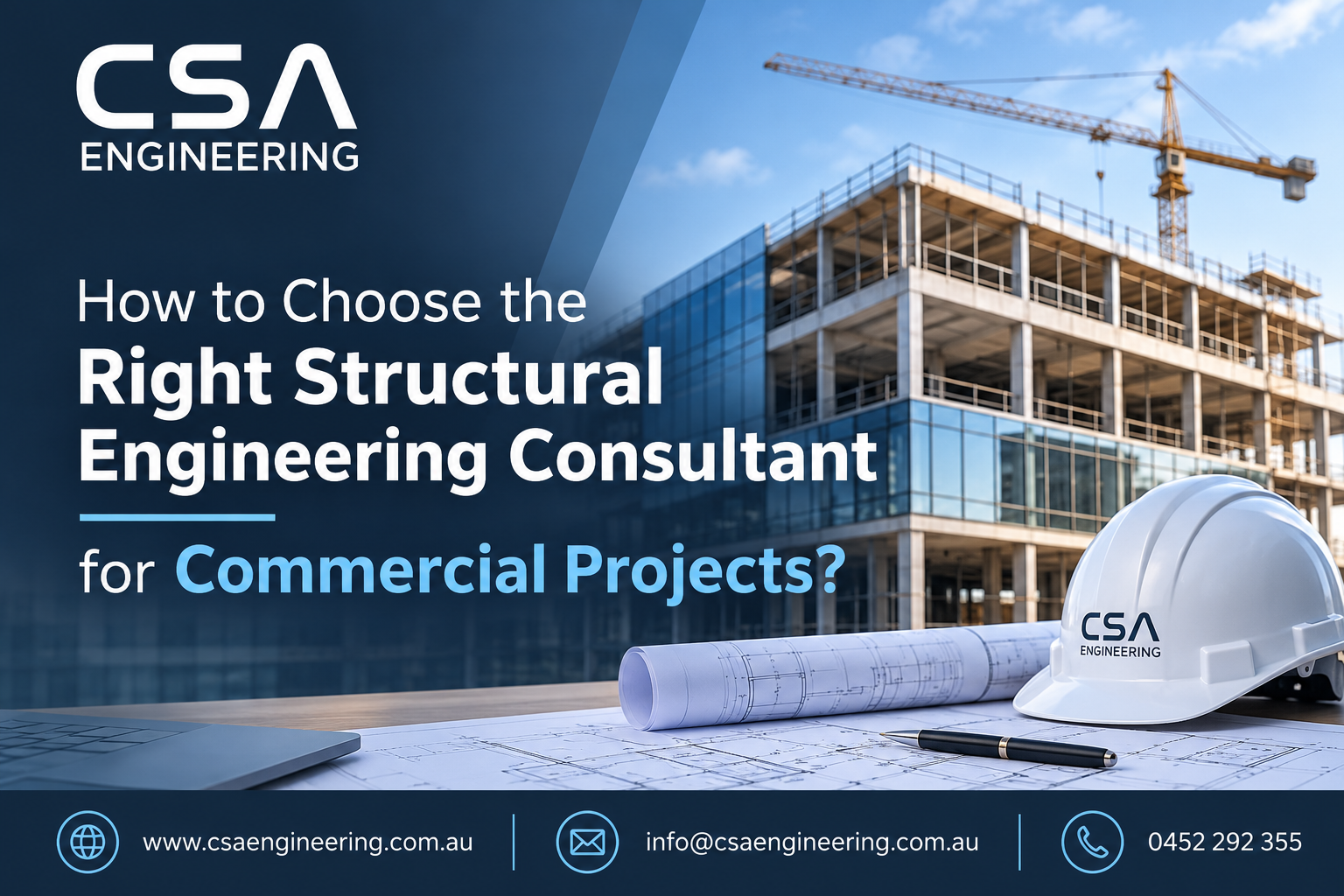
A commercial project can survive a late paint colour change. It rarely survives a structural surprise. A missed load path, a wrong soil assumption or a steel frame that clashes with services can cost weeks of programme and a large amount of money. Most of these problems trace back to one early decision: who you hired to design the structure.
Choosing a structural engineering consultant is not a simple purchasing task. The firm you pick influences your cost plan, your construction programme and the risk your team carries on site. This guide explains what to check, which questions to ask and which warning signs deserve attention, so you can build a shortlist with confidence.
Why the Right Structural Engineering Consultant Matters
Commercial buildings carry heavier and more varied loads than houses. Think of long clear spans in a warehouse, plant on a roof, stacked floors in an office or crane loads in a workshop. Wind, fire and future tenant changes add further layers.
A capable structural engineering consultant does more than produce drawings. They test the architect’s concept early, flag clashes before they reach the builder and suggest options that save material without cutting safety. In our experience, the lowest fee often becomes the highest final cost, because redesign during construction costs far more than good advice during concept.
How Do You Choose a Structural Engineering Consultant?
To choose a structural engineering consultant, check their registration and chartered status, review similar commercial projects, confirm professional indemnity insurance, ask how they coordinate with architects and certifiers, and compare fee proposals by scope rather than price. Pick the team that communicates clearly and explains risks before you sign.
Here is what each check looks like when you assess a structural engineering consultant in practice.
1. Check Registration and Credentials
Start with the basics. Engineers Australia offers Chartered status (CPEng) and the National Engineering Register (NER), both of which show an engineer has been assessed against a national benchmark. State rules add another layer. Queensland requires RPEQ registration for professional engineering services, Victoria runs its own registration scheme, and NSW applies registration requirements to engineers working on certain building classes. Ask for the registration number and verify it on the public register. If a firm cannot provide one quickly, treat that as a stop sign.
2. Look for Relevant Commercial Experience
A strong residential engineer is not automatically a strong commercial one. Ask for examples that match your building type, size and structural system, such as a steel portal frame warehouse or a multi-storey concrete office. Ask what went wrong on a past job and how it was fixed. Honest answers reveal more than a polished portfolio.
Also check material range. Your structural engineering consultant should be comfortable with concrete, steel and timber, because the best system may change once costs are compared. CSA Engineering delivers structural analysis and design across all three materials, which helps when a concept needs to switch direction mid-design.
3. Confirm Insurance and Compliance Knowledge
Professional indemnity insurance protects you if a design error causes loss. Ask for a current certificate and check that the cover suits the scale of your project. Then test compliance knowledge. A good structural engineering consultant can explain in plain language how the National Construction Code and standards such as AS/NZS 1170 for structural actions, AS 3600 for concrete and AS 4100 for steel apply to your building. If the answers are vague, the drawings may be too.
4. Review Technical Capability and Coordination
Modern commercial design relies on analysis software and coordinated models. Ask which tools the team uses and how they share models with architects and services engineers. Programs such as ETABS, SAP2000, STAAD and Revit are common in this work. Software alone does not make a good engineer, but a team that works from coordinated models catches clashes earlier and answers builder queries faster.
5. Ask How They Handle Ground Conditions
Structures sit on soil, and soil is where surprises hide. A thorough consultant will ask for geotechnical data before finalising foundations. Look for a firm that treats soil testing and footing design as part of the structural scope, not an afterthought. This prevents the classic situation where an unexpected clay layer forces a redesign after excavation has started.
Questions to Ask Before You Hire a Structural Engineering Consultant
Use these questions in your first meeting. The answers matter, but so does how clearly they are explained.
- Who will do the design work, and who will review it?
- Which similar commercial projects have you delivered recently?
- How do you coordinate with architects, builders and certifiers?
- What does your fee include, and what counts as a variation?
- How do you handle design changes during construction?
- What are your usual turnaround times for drawings and site queries?
Red Flags to Watch For
These signs usually predict trouble with a structural engineering consultant later:
- A fee far below other quotes, with no scope breakdown
- No registration number or insurance details on request
- Unclear responsibility between design, review and site support
- Slow replies before you have even signed
- Guarantees of certifier sign-off before they have seen your plans
How to Compare Fee Proposals Fairly
Compare scope, not totals. Two proposals can sit a few thousand dollars apart and still cover very different work. Check whether site visits, shop drawing review, design changes and certification documentation are included. Fixed fees suit a well-defined scope, while staged fees suit briefs that are still evolving. The cheapest option is rarely the lowest cost over the life of the project.
Bring Your Consultant In Early
Involve your structural engineering consultant at concept stage, alongside the architect and before the budget is locked. Early advice on grids, spans and structural systems can reduce material use and shorten the programme. An integrated building design team makes this easier because layout and structure are resolved together.
Your project type also affects who you need. If you are altering an existing commercial premises, ask whether updated structural engineering drawings will be required. If the site includes plant or heavy equipment, check whether the same firm offers industrial design and certification. Gaps in certification are a common source of late delays, as our guide to engineering certification explains.
Final Thoughts on Choosing a Structural Engineering Consultant
The right structural engineering consultant is the one who combines verified credentials, relevant commercial experience, clear communication and a transparent fee. Take time to check each area, ask the hard questions and involve them early. That effort costs little compared with fixing a structural problem on site.
CSA Engineering supports commercial and industrial clients across Queensland, New South Wales, Victoria and Western Australia. If you are comparing options, speak with our structural engineering team about your project.
Frequently Asked Questions
What qualifications should a commercial structural engineer have?
Look for a degree in civil or structural engineering, Chartered status (CPEng) or National Engineering Register listing, and any state registration required where the project is located, such as RPEQ in Queensland.
How early should I hire a structural engineering consultant?
Ideally at concept design, before the budget and layout are fixed. Early structural input helps control cost, avoids clashes and gives the design team realistic span and material options.
What is the difference between a structural engineer and a civil engineer?
A structural engineer designs the load-bearing frame of buildings and structures. A civil engineer usually covers broader infrastructure such as roads, drainage and earthworks. Some professionals work across both, so check the specific experience.
How much does a structural engineering consultant cost?
Fees depend on project size, complexity, materials and the scope of services. Ask for written proposals that list inclusions, so you can compare like with like instead of comparing totals alone.
Can one firm handle both structural and industrial projects?
Yes, if the team has experience in both. CSA Engineering offers structural engineering alongside industrial design and certification, which suits sites with buildings, platforms and equipment.