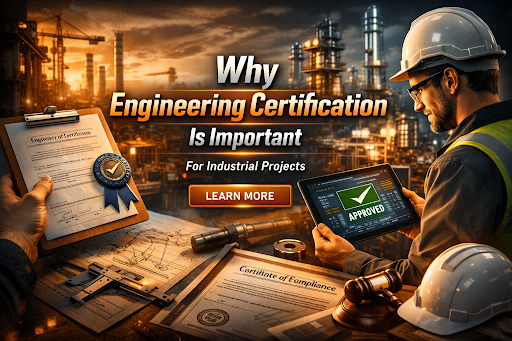
These projects require accuracy, safety, and dependability for many years to come. Every element involved must be compliant with rigorous standards. Here is where engineering certification becomes extremely important. It makes sure that the specifications of the components involved in the projects comply with all codes and standards, thus minimizing the chances of malfunctioning.
Ensuring Compliance with Industry Standards
When we talk about engineering certification, we mean an official endorsement that confirms compliance with all the codes of practice in the industry. The process of designing, building, installing, and testing the various elements used during these projects requires strict adherence to codes and standards.
Without an engineering certification, projects may face the following problems:
- Legal complications and delays
- Increased liability risks
- Rejection by regulatory authorities
It is through the documents issued by the engineers that stakeholders are assured that the project complies with all codes of practice.
Improving Safety and Risk Management
One of the aspects that is of the utmost importance in an industrial project is its safety. It is due to the fact that certification guarantees that all components have been checked to reveal possible sources of danger. Thus, it avoids any risks linked to structural collapse, malfunctioning, and inefficiency.
In the middle of complex project lifecycles, engineering certification becomes essential for:
- Detection of flaws in design
- Validation of the calculation of loads and stress tolerance
- Installation and safe usage of machinery
Organizations that pay attention to the certification process usually suffer less from accidents and provide better working conditions.
Enhancing Project Quality and Performance
The benefits of certification go far beyond safety and compliance. In fact, the review by skilled engineers results in a higher quality of projects as a whole.
Advantages of high-quality engineering projects include:
- Effective material choice
- Precise engineering calculations
- Operational efficiency
CSA Engineering and similar organizations value the significance of comprehensive assessment and verification procedures, which ensure that all projects meet performance standards without sacrificing safety and compliance.
Supporting Smooth Approvals and Project Execution
The main problem with industrial projects is securing approval from regulatory bodies and other interested parties. Engineering certification facilitates the approval process through documentation that satisfies all regulatory criteria.
These include:
- Quick approvals for projects
- Minimal changes to designs rework
- Improved coordination among teams
Moreover, certified projects have a higher probability of being delivered on time and under budget due to proactive handling of any problems.
Building Trust with Stakeholders
Industrial ventures require cooperation among many stakeholders, such as investors, contractors, and authorities. Certification helps in gaining their trust, since it shows that your venture has been evaluated properly.
They will be assured that:
- The project is reliable technologically
- Risk level is minimal
- Project meets all compliance requirements
Trust is vital in obtaining investments and establishing lasting relationships within the industry.
A Strategic Approach to Long-Term Success
Today, in the competitive industrial landscape, using uncertified designs or systems can have dire consequences. Using an engineering certificate at each step in any business endeavor will not only ensure success but also make the project compliant with relevant regulations.
For this purpose, it is vital to work with engineering consultants. One of the best options in the market would be CSA Engineering. These consultants specialize in validating structural designs, making sure that the projects comply with safety standards, and providing project certification, among other services. Their focus on precision, safety, and efficiency makes them perfect choices for any company.
From the overall perspective, implementing systems such as structural engineering, compliance engineering, design verification, industrial safety standards, and mechanical certification will add even more value to the projects.