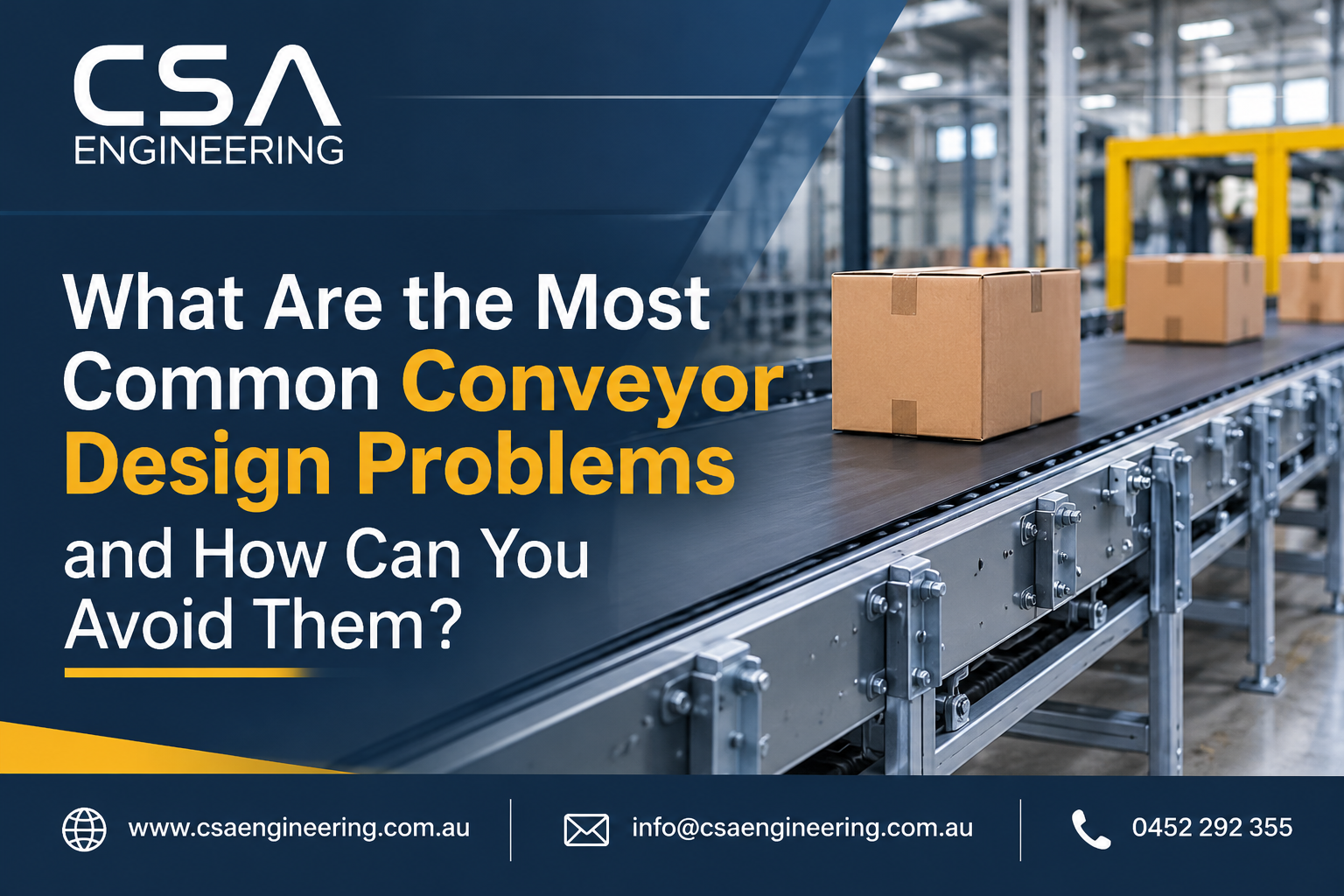
A conveyor can run for years before a hidden design flaw shows itself. Then a bearing seizes, a frame cracks near a weld, or a blocked chute stops the whole line. The cost is rarely just the repair. It is lost production, safety exposure and an awkward conversation about who signed off the design.
Most conveyor design problems begin long before commissioning. They start with incomplete design data, rushed assumptions or a structure that was never properly checked. This guide covers the most common conveyor design problems on Australian mining, manufacturing and bulk handling sites, why they happen and how to avoid them. Whether you are specifying a new system or reviewing an old one, early input from specialists in conveyor design prevents most of what follows.
What Are the Most Common Conveyor Design Problems?
The most common conveyor design problems are underestimated loads, poor belt tension and drive sizing, weak support structures, bad transfer and chute layout, missing safety guarding, and designs that ignore maintenance access. Most come from incomplete design data and skipped verification, and all can be avoided with early engineering review.
Each of these conveyor design problems is a design issue, not a maintenance issue. Fixing it after installation costs far more than getting it right on paper.
1. Underestimated Loads and Material Behaviour
Many designs are built around an average throughput and a textbook material density. Real operations are messier. Material arrives in surges. Moisture changes density from one week to the next. Large lumps land on the belt with real impact force.
When design loads are too low, the belt overloads, material spills and idlers wear early. Frames also carry more than they were sized for. Restarting a fully loaded belt after an unplanned stop adds dynamic loads that static calculations miss.
How to avoid it: Record maximum flow rate, bulk density range, lump size, moisture and temperature before design starts. Then design for the worst credible case, not the typical day. Structural actions such as wind on outdoor galleries should follow AS/NZS 1170.
2. Incorrect Belt Tension, Drive and Pulley Sizing
Belt tension is a balancing act. Too little and the belt slips on the drive pulley, which burns rubber and stalls the line. Too much and it shortens belt life and overloads shafts, bearings and splices.
Drive sizing causes similar trouble. A motor chosen for running load may struggle at start-up, especially on inclined or long overland conveyors. Shafts with sharp keyway corners or abrupt diameter changes can also fail through fatigue, often with little warning.
How to avoid it: Calculate tension at start-up, steady running and stopping. Check shaft fatigue, not just peak strength. Place the take-up where it controls tension properly.
3. Weak or Poorly Verified Support Structures
A conveyor is only as sound as the steel holding it up. Frames, trestles and galleries are often designed for the dead weight of the belt and material and little else. Vibration, maintenance loads and corrosion get left out.
The results show up slowly: cracked welds, loose connections, misaligned rollers and belts that refuse to track. Foundations add to the problem, because a small footing movement can pull a long conveyor out of line.
How to avoid it: Check the support structure against AS 4100 using realistic combined loads. For complex or heavily loaded structures, finite element analysis shows where stress concentrates. Treat this as structural engineering work and get an independent check before steel is cut.
4. Poor Transfer Points and Chute Layout
Transfer points are where conveyors fail most visibly. Steep or sharp chute angles cause blockages. Poor geometry throws material off-centre, damages the belt and creates dust and spillage. Wet, sticky material makes everything worse.
How to avoid it: Design the chute around your actual material, not a generic one. Control the speed and direction of material as it lands on the receiving belt, and allow for wear liners and inspection access. Treat the conveyor as part of the wider process plant, because hoppers, feeders, screens and crushers all affect what lands on the belt.
5. Inadequate Safety Guarding
Conveyors have plenty of hazards: nip points at pulleys and return rollers, moving belts and long exposed runs. Guarding added late tends to be awkward, so crews remove it for maintenance and forget to refit it. Emergency stop pull-cords that cannot be reached along the full length are another frequent finding.
How to avoid it: Design guarding and stop systems from the start against AS 1755 (conveyors, safety requirements) and AS/NZS 4024 (safety of machinery). Make guards quick to remove and impossible to run without. Australian WHS laws also place duties on designers of plant, so a documented safety review protects the business.
6. Ignoring Maintenance Access
Rollers, idlers, scrapers and pulley lagging all need replacing. If the design offers no safe way to reach them, crews work from ladders or climb the structure. Jobs take longer, risk rises and maintenance gets postponed.
How to avoid it: Plan walkways, handrails, stairs and lifting points while the layout is still flexible. Make sure access platforms are strong enough and properly certified, not bolted on as an afterthought.
Why Do Conveyor Design Problems Keep Happening?
Four causes repeat across industries: incomplete design data, tight project timelines, mechanical, structural and safety teams working separately, and modifications made without re-checking the original design.
A typical scenario shows how conveyor design problems appear on site. A site lifts throughput by speeding up the belt. The drive, shafts and supporting structure are never rechecked at the new loads. Months later, bearings run hot and the frame develops cracks. Nothing was wrong with the original design. The change simply broke its assumptions.
How Can You Avoid Conveyor Design Problems?
Avoiding conveyor design problems follows a repeatable process:
- Build a complete design basis. Define material, rate, lump size, moisture, environment, duty cycle and site conditions before drawing anything.
- Design the disciplines together. Mechanical, structural and safety decisions affect each other, so they belong in one conversation.
- Verify independently before fabrication. A second set of qualified eyes from industrial engineering services finds what the original designer is too close to see.
- Re-check every modification. Higher speed, longer length, new equipment or a different material all change the loads.
- Think about the whole life of the system. Plan wear parts, spares, inspection and access from day one.
- Keep proper documentation. Calculations, drawings and compliance certificates support audits, insurers and regulators.
Which Australian Standards Apply to Conveyor Design?
Several standards commonly apply when you want to avoid conveyor design problems:
- AS 1755: conveyor safety requirements
- AS/NZS 4024: safety of machinery series
- AS 4100: steel structures
- AS/NZS 1170: structural design actions
- WHS Regulations: plant and machinery safety duties
Meeting these standards is the minimum. A conveyor that cannot show compliance is hard to defend after an incident.
When Should You Involve an Engineer?
Bring in an engineer before the design is finalised on a new conveyor, before changing speed, length or capacity, when relocating a system, after a failure or near-miss, and before a safety audit. Existing conveyors can be assessed too, which shows what complies and what needs upgrading.
Conclusion
Conveyor design problems are rarely mysterious. They come from guessed loads, unchecked structures, late safety decisions and missing access. Each one is cheaper to fix on paper than on site. If you are planning a new system or worried about an existing one, ask the CSA Engineering team, which delivers engineering services in Australia, for an early review of your conveyor design. It costs far less than an unplanned shutdown.
FAQs
What causes conveyor belt slippage?
Slippage usually means belt tension is too low for the load, or the drive pulley cannot grip the belt. Poor take-up placement and undersized drives are common design causes.
Do conveyors need engineering certification in Australia?
Industrial conveyors must meet Australian safety standards, and many sites need engineering design verification and certification to show compliance.
Can an existing conveyor be assessed?
Yes. An engineer can review an installed conveyor, confirm compliance and list any upgrades needed.
What does conveyor design verification include?
It typically covers load and structural analysis, shaft and drive checks, a safety compliance review and the certification documentation.