In the world of industrial operations and heavy machinery handling, lifting certification plays a critical role in ensuring safety, compliance, and efficiency across job sites. Professionals who undertake a lifting certification course gain valuable knowledge and practical skills that empower them to operate lifting equipment properly and meet regulatory standards. At CSA Engineering, we understand how vital it is to equip your workforce with the right expertise — not just to meet compliance requirements but to elevate workplace safety and competence.
What Is Lifting Certification?
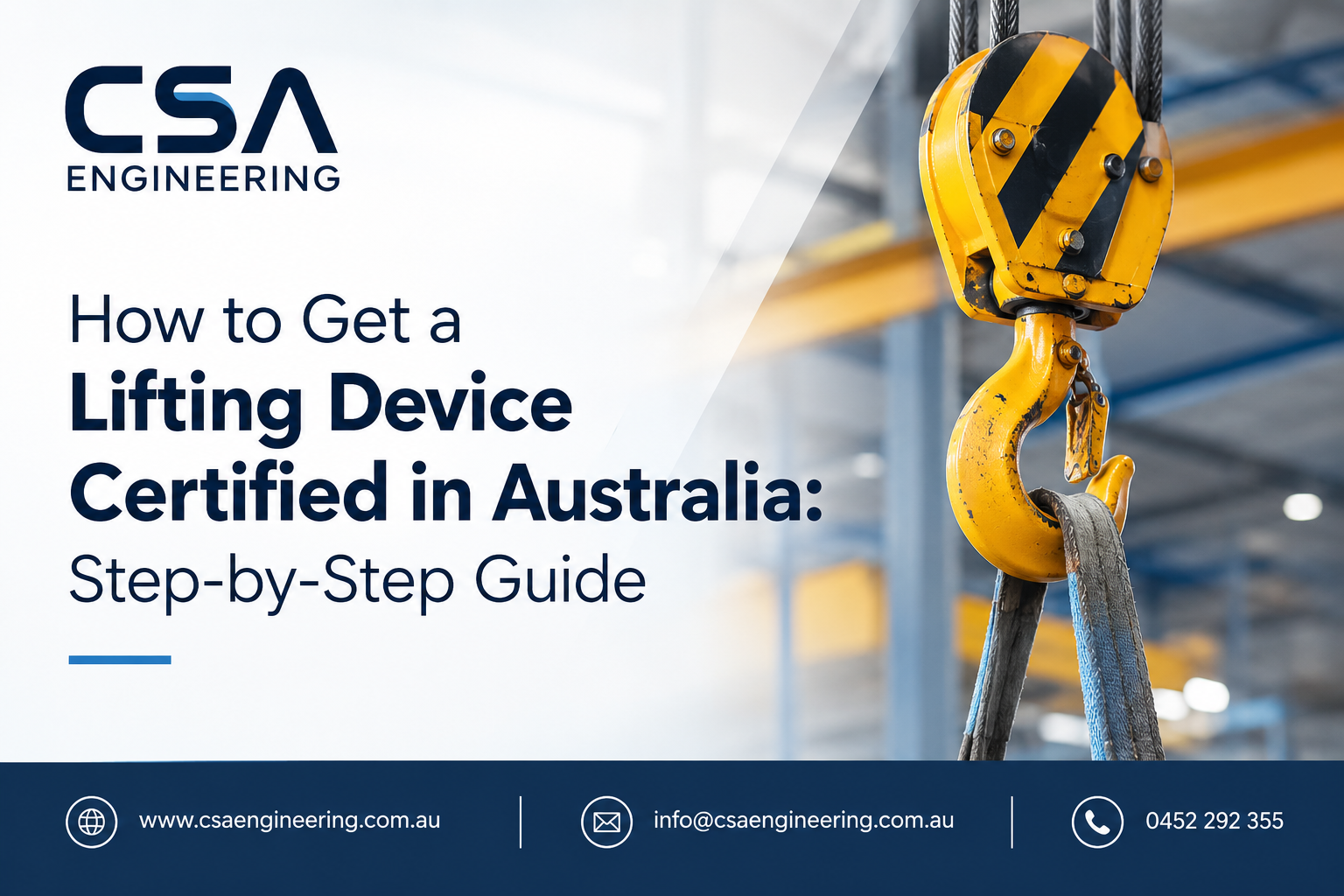
A lifting certification is an official recognition that a person has completed training demonstrating their ability to safely manage and operate lifting devices and equipment. This includes understanding the relevant standards, inspection requirements, operational hazards, and documentation procedures to ensure that lifting activities are conducted responsibly.
CSA Engineering supports industries across Australia with lifting device certification services, and our experience with lifting certification standards such as AS4991-2004 helps clarify what skills are essential on the job.
Key Skills Covered in a Lifting Certification Course
Below are the essential skills that are typically included in a comprehensive lifting certification training program:
1. Understanding Lifting Standards and Compliance
One of the foundational skills learners gain in a lifting certification course is a thorough understanding of industry standards and regulations that govern lifting equipment. This includes compliance with standards like AS4991-2004 for lifting devices, ensuring equipment is inspected, maintained, and certified according to the correct protocols.
This knowledge helps professionals identify the legal and safety requirements they must adhere to in every lifting operation.
2. Load Calculations and Weight Assessment
Proper load estimation is one of the core technical skills students learn. Participants are trained to calculate the safe working load limit (WLL) of equipment, understand factors of safety, and determine how weight, center of gravity, and load configuration affect lift planning.
This skill is crucial for preventing equipment failure or accidents during lifting operations.
3. Pre-Use Equipment Inspection
A lifting certification course emphasizes the importance of thorough pre-use inspections. Trainees learn to check lifting slings, shackles, hoists, hooks, cranes, and any related rigging hardware for wear, deformation, or defects before any lifting task begins.
Developing inspection skills ensures that equipment is safe to use and meets compliance requirements.
4. Rigging and Slinging Techniques
Correct rigging and slinging are vital for securing loads safely. Courses cover the principles of rigging, choosing the right rigging gear, recognizing proper hitches, and setting up loads so that they remain stable during a lift.
Hands-on training in these techniques enhances workplace safety and builds operational confidence.
5. Risk Assessment and Hazard Identification
A well-structured lifting certification program teaches participants how to conduct comprehensive risk assessments. Trainees learn to identify potential hazards like pinch points, unstable load conditions, and site-specific risks.
This proactive skill set equips workers to predict and mitigate risks before initiating a lift — making every task safer and more efficient.
6. Communication and Signalling Proficiency
Effective communication is crucial on any lift site. Training includes learning standard hand signals, radio communication procedures, and teamwork strategies to ensure that crane operators, riggers, and supervisors work in sync.
These skills help reduce misunderstandings during a lift and support seamless operations.
Why These Skills Matter
A lifting certification course enriches professionals with both theoretical knowledge and practical competence. These essential skills not only help maintain compliance with regulatory bodies but also promote safe lifting practices that protect personnel, assets, and operations at every stage.
At CSA Engineering, we partner with industries to ensure that lifting certification delivers real value — supporting safe operations with expertly guided training and adherence to industry standards.
Take the Next Step in Your Career
Are you ready to improve your team’s skills and enhance operational safety? Contact CSA Engineering today to learn more about lifting certification training, expert guidance, and how we can help your workforce gain essential lifting competencies.Reach out now and ensure your team is empowered with the right skills for the job!