Introduction
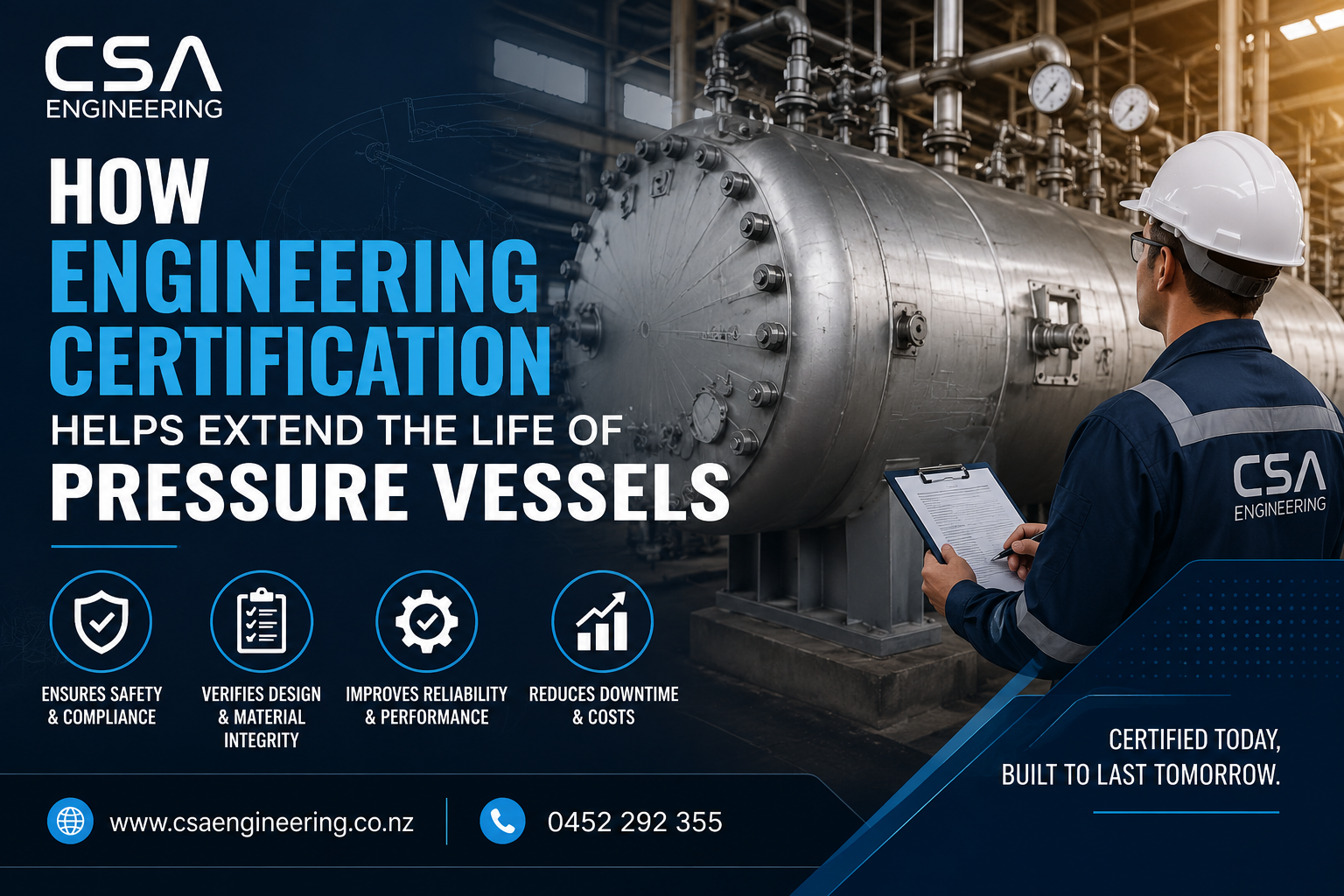
Pressure vessels are among the most critical and highest-risk assets in Australian industry. From chemical processing plants in Queensland to oil and gas facilities in Western Australia, these vessels operate under extreme conditions of pressure, temperature, and chemical exposure. When they are properly managed and certified, they perform reliably for decades. When they are neglected, the consequences can be catastrophic. This is why engineering certification is not simply a regulatory requirement. It is the single most powerful tool available for extending the operational life of pressure vessels while keeping people, assets, and communities safe.
CSA Engineering has built a proven track record in delivering engineering certification and compliance services across Australia. With qualified professionals and a rigorous approach to industrial assessments, we helps businesses get more life, more value, and more confidence from their pressure vessel assets.
The Importance of Pressure Vessels in Industrial Operations
Pressure vessels are used across a remarkably wide range of industries. Common applications include:
- Storage and transportation of gases, liquids, and chemical compounds
- Heat exchangers and boilers in energy generation facilities
- Reactor vessels in chemical and pharmaceutical manufacturing
- Compressed air and hydraulic systems in mining and construction
- Separation and processing equipment in oil, gas, and petrochemical plants
Each of these applications involves equipment that degrades over time. Corrosion, fatigue, thermal cycling, and pressure fluctuations all take a toll on vessel integrity. Without systematic engineering oversight, the gap between what a vessel looks like on the outside and what is actually happening to its structure can become dangerously wide. Accessing reliable engineering services is the first step toward understanding and managing that gap.
Understanding Engineering Certification for Pressure Vessels
Engineering certification for pressure vessels involves a structured process of technical evaluation, documentation review, and professional sign-off. The process typically covers:
- Verification that the vessel was designed and fabricated to relevant Australian standards, including AS 1210 and AS 4343
- Assessment of current structural condition through inspection and non-destructive testing
- Review of operating history, maintenance records, and any previous modifications
- Formal certification by a registered or chartered engineer authorised to provide statutory engineering opinions
The outcome of this process is a certified engineering record that confirms the vessel is fit for continued service, identifies any conditions that require attention, and establishes the basis for future inspection intervals. Without this record, businesses in Australia are operating blind, and potentially in breach of their legal obligations under state and national safety legislation.
How Engineering Certification Extends the Life of Pressure Vessels
One of the most significant benefits of regular engineering certification is the early identification of deterioration before it reaches a point of failure or forced retirement. A qualified mechanical engineering consultant conducting a pressure vessel assessment will evaluate wall thickness readings, weld integrity, nozzle conditions, support structures, and corrosion allowances. These findings feed directly into remaining life calculations that tell operators how much service life is left in the vessel and what needs to happen to extend it.
Key mechanisms through which certification extends vessel life include:
- Early detection of localised corrosion before it becomes a structural threat
- Identification of fatigue cracking at welds, nozzles, and support attachments
- Verification of coating and lining integrity to prevent accelerated internal degradation
- Confirmation that operating parameters remain within original design limits
- Recommendations for targeted maintenance interventions that are cost-effective and timed correctly
This proactive approach is far more economical than reactive management. Vessels that are regularly certified and maintained consistently outlive those that receive only reactive attention when problems become visible.
Pressure Vessel Certification Australia: Meeting Regulatory Requirements
In Australia, pressure vessel regulation is managed through a combination of national frameworks and state-based workplace health and safety legislation. The specific requirements for registration, inspection frequency, and engineering sign-off vary by state, but the underlying principle is consistent: vessels above certain design pressures must be formally assessed and certified by qualified engineers.
Obtaining formal pressure vessel certification australia compliance means more than satisfying a regulator. It means having documented evidence that your asset has been professionally evaluated, that risks have been identified and addressed, and that the vessel is operating within its approved design envelope. This documentation is critical for insurance purposes, major project prequalification, and due diligence processes when assets are acquired or sold.
Businesses operating without current pressure vessel certification in Australia are exposed to significant regulatory, financial, and legal risk. CSA Engineering helps clients across Australia establish and maintain compliant certification programs that satisfy both state and national requirements.
The Role of Pressure Vessel Design Services in Long-Term Reliability
Certification does not begin at the end of a vessel’s design process. It is embedded in it. When pressure vessels are designed with compliance and longevity in mind from the outset, they require less corrective intervention over their operational life. This is where purpose-built pressure vessel design services make a measurable difference.
Proper design services for pressure vessels include:
- Selection of appropriate materials for the specific operating environment and fluid chemistry
- Engineering of appropriate corrosion allowances to account for expected degradation rates
- Design of access provisions that allow for practical future inspection and maintenance
- Structural optimisation that balances safety factors with material efficiency
- Documentation that supports future certification and lifecycle management
Vessels designed with these principles in place are significantly easier and more economical to certify and recertify throughout their service life.
Why Pressure Vessel Design Consultants Matter
Not all pressure vessels are standard. Many operate in highly specialised environments with unique chemical exposures, unusual operating cycles, or demanding physical constraints. In these cases, the expertise of specialist pressure vessel design consultants becomes essential. These professionals bring the combination of regulatory knowledge, materials expertise, and structural engineering capability needed to develop solutions that are both technically sound and practically maintainable.
Engaging specialist consultants during the design or modification phase of a pressure vessel’s life prevents the costly engineering problems that arise from vessels that were designed without adequate consideration of their operating environment or future certification requirements. CSA Engineering provides this level of specialist consultancy to clients across Australian industry.
Storage Tank Engineering and Asset Lifecycle Management
Storage tanks represent a related category of industrial asset where the principles of engineering certification and lifecycle management apply with equal force. Atmospheric and low-pressure storage tanks used in the oil, gas, water, and chemical industries are subject to similar degradation mechanisms as pressure vessels, and require comparable levels of engineering oversight.
Effective storage tank engineering encompasses inspection programs, fitness-for-service assessments, repair and modification engineering, and decommissioning planning. When these activities are managed by a qualified engineering team with experience across the full asset lifecycle, tank operators can make informed decisions about maintenance, refurbishment, and replacement that optimise both safety and total cost of ownership.
The Importance of Professional Engineering Expertise
The quality of an engineering certification outcome is directly determined by the quality of the engineering professionals delivering it. An experienced industrial engineering consultant brings not only technical knowledge but also practical industry experience that allows them to contextualise findings within the specific operational reality of a given facility. This combination of technical rigour and practical judgment is what separates a genuinely useful certification from a box-ticking exercise.
Comprehensive engineering consulting services for pressure vessels should include not only inspection and certification but also ongoing engineering support for maintenance decisions, operational changes, and future modifications. The right consulting partner becomes a long-term asset in its own right, accumulating knowledge of a facility’s equipment history that informs better decisions over time.
In regulated environments, professional engineer certification provides the formal credentialling assurance that a statutory engineering opinion has been provided by a qualified and accountable professional. This is particularly important in Queensland and other states where chartered or registered engineer sign-off is mandated by legislation.
Why Businesses Across Australia Trust CSA Engineering
CSA Engineering has developed deep expertise in pressure vessel certification, industrial asset management, and compliance engineering across a wide range of Australian industries. The firm’s team combines formal engineering qualifications with hands-on experience in the mining, resources, manufacturing, and processing sectors.
Clients choose CSA Engineering because the firm delivers:
- Rigorous technical assessments grounded in current Australian standards
- Certification documentation that satisfies regulatory, insurance, and commercial requirements
- Practical engineering advice that extends asset life and reduces operational costs
- Fast, responsive service that minimises disruption to production and operations
- End-to-end support from design review through to ongoing compliance management
To learn more about CSA Engineering’s capabilities and to discuss your pressure vessel certification requirements.
Conclusion
Pressure vessels are high-value, high-risk assets. The businesses that manage them most effectively are those that treat engineering certification not as a compliance cost but as a strategic investment in asset longevity, operational reliability, and risk reduction. A properly certified vessel is a vessel that can be operated with confidence, maintained efficiently, and kept in service for its full economic life.
If your business operates pressure vessels, storage tanks, or related industrial equipment anywhere in Australia, the team at CSA Engineering is ready to help. From initial design review to ongoing certification support, we deliver engineering expertise that protects your people, your assets, and your business. Contact the team today!
Also Read: https://www.csaengineering.com.au/concept-to-approval-the-complete-building-design-journey/