Most expensive project problems start the same way. Someone assumes a design or machine is compliant, and the gap only shows up at inspection, during an audit or after an incident. Engineering certification closes that gap early. A qualified engineer independently checks that your design, structure or equipment meets the relevant Australian Standards before it goes into service. The result is faster approvals, fewer surprises on site and a safer workplace.
This guide explains what engineering certification involves, how it saves time and money, where it protects people most, and how to choose the right partner for your project.
What Is Engineering Certification?
Engineering certification is a formal check by a qualified engineer that a design, structure, machine or item of equipment complies with applicable standards, regulations and safe working requirements. The output is documentation you can rely on, such as calculations, compliance reports and signed certificates that regulators, insurers and clients accept as proof.
It is different from a routine inspection. An inspection looks at the condition of something at a point in time. Certification confirms the design and construction are sound in the first place and that the item is fit for its intended use. Common examples across Australia include:
- Lifting equipment: beams, lugs, cranes and rigging, assessed against standards such as AS 1418 and AS 2550
- Pressure vessels: assessed against AS 1210
- Fixed platforms, walkways, stairs and ladders: assessed against AS 1657
- Steel structures and equipment supports: assessed against AS 4100
- Trailers and other vehicle-related equipment: checked for compliance and fitness for purpose
Why Engineering Certification Saves Time, Money and Improves Safety
Engineering certification saves time by speeding up approvals and avoiding redesigns, saves money by preventing rework, fines and unplanned downtime, and improves safety by independently verifying that structures and equipment meet Australian Standards before use. It gives owners, regulators and insurers documented proof that a design is compliant and fit for purpose.
All three benefits come from one principle: a problem found on paper costs far less than a problem found on site.
It Saves Time
Regulators and asset owners want evidence before they sign off. When your calculations, drawings and compliance reports are already complete and independently verified, approvals move faster. A certified engineer also catches non-compliant details while the design is still a drawing. Changing a weld detail or support spacing at design stage can take an afternoon. Changing it after fabrication can take weeks.
Certified documentation also speeds up what comes later. Handover, audits, insurance renewals and equipment transfers all run smoother when the paperwork is complete and traceable. That is why a structured industrial design and certification process runs from consultation and technical assessment through to design review and sign-off, so nothing is discovered at the end.
It Saves Money
Rework is the biggest hidden cost on most engineering projects. Steel that has to be cut out, a vessel that must be taken out of service or a trailer that fails a compliance check will cost far more than the original certification. Early verification also lets engineers fine-tune designs, so you avoid over-specifying materials as a safety buffer.
Then there is downtime and liability. Unplanned shutdowns stop production, and penalties for serious safety failures are heavy. Safe Work Australia lists a model maximum penalty of $21,274,000 for industrial manslaughter by a body corporate, although each state and territory sets its own figures and indexes them each year. Documented compliance will not remove your duties, but it shows you took reasonable steps.
It Improves Safety
Safety is the main reason certification exists, and the data supports it. Safe Work Australia reports that vehicle incidents account for 42% of worker fatalities (84 deaths in 2023), the largest share of any mechanism. Trailers, lifting gear and elevated platforms all involve high energy and serious consequences when something fails.
Certification lowers that risk because a qualified engineer checks load ratings, structural adequacy and failure modes under realistic operating conditions. Experienced engineers know where things tend to go wrong, including fatigue at welded connections, under-rated lifting lugs, thinning vessel walls and guardrails that cannot take the required load. Independent verification puts a second qualified set of eyes on the equipment before anyone relies on it.
Where Engineering Certification Matters Most
Engineering certification applies to many asset types, but four areas carry the highest consequences when something goes wrong.
Lifting Equipment
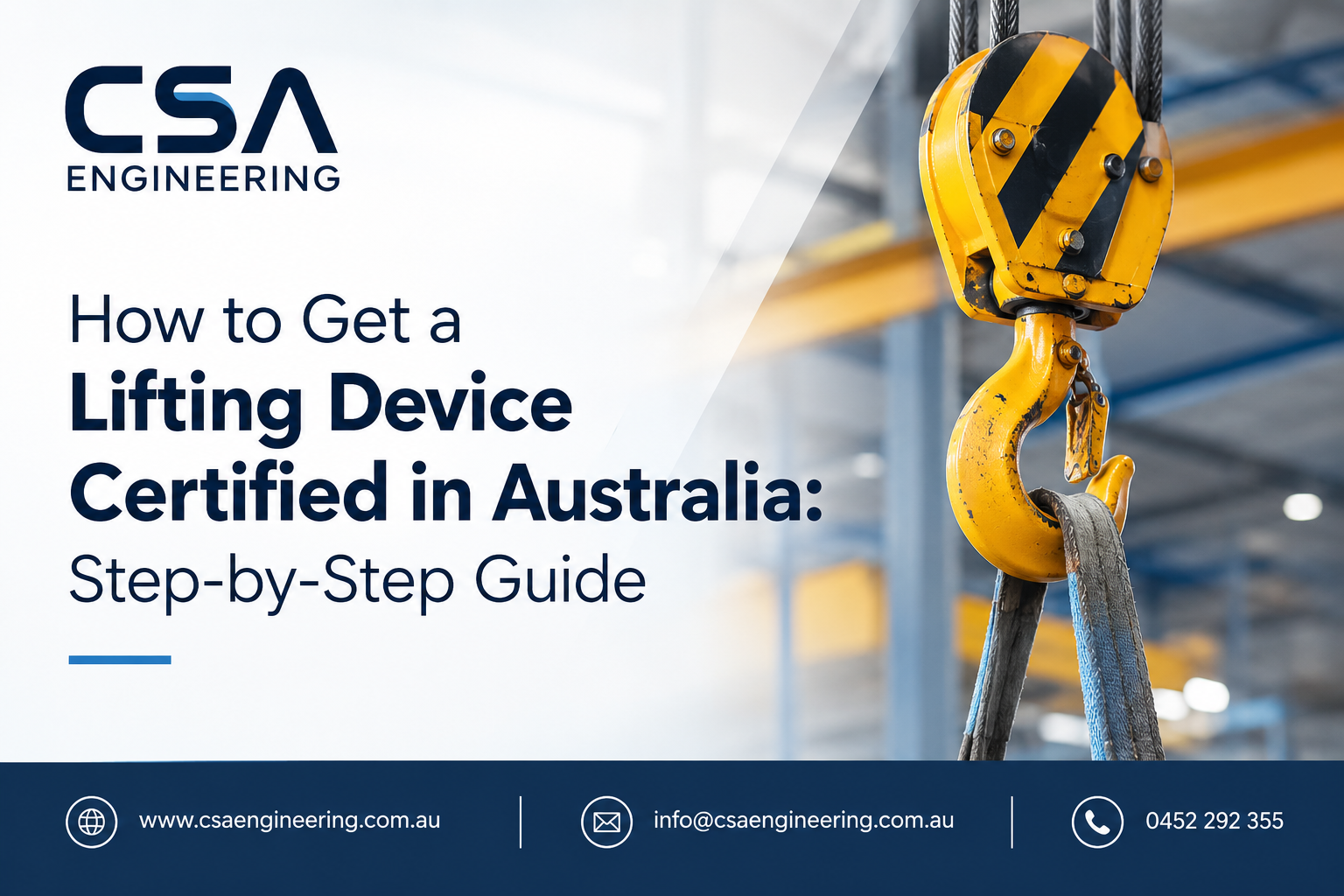
A failed lifting lug or overloaded beam can drop a load onto people below. Lifting devices certification verifies design adequacy and load ratings for beams, lugs, cranes and rigging. If you want to see how the process unfolds, read our guide to the lifting device certification process in Australia.
Pressure Equipment
Stored energy makes pressure vessels unforgiving. Pressure vessel certification confirms structural adequacy and compliance with Australian pressure equipment requirements, and it gives operators a documented basis for safe continued use.
Platforms and Access Structures
Platforms, walkways, stairs and ladders carry people and equipment at height, so loads, guardrails and access requirements need to be right. Platform design and certification checks these elements against AS 1657 before the structure is used.
Trailers and Vehicles
Fleet owners and manufacturers need trailers that are fit for purpose and compliant with the rules that apply to them. Trailer engineering brings design, mechanical and safety checks together so your fleet stays on the road and out of trouble.
When Do You Need Engineering Certification?
Engineering certification is typically required, or strongly advisable, when you:
- Build or install new plant, equipment or structures
- Modify existing equipment, such as adding load or moving a lifting point
- Buy second-hand equipment with no design records
- Prepare for a regulator, insurer or client audit
- Return equipment to service after repair or an incident
How to Choose an Engineering Certification Partner
Not every engineering certification provider delivers the same value. Look for:
- Qualified engineers with experience in your type of equipment and relevant registrations
- Knowledge of Australian Standards and the state-based requirements where you operate
- A clear process with defined stages and realistic turnaround times
- Early involvement, so engineers can guide the design instead of only signing it off
- Audit-ready documentation that a regulator or insurer will accept
CSA Engineering supports clients across Queensland, New South Wales, Victoria and Western Australia, including regional and remote sites.
Conclusion
Engineering certification is not a box to tick at the end of a project. Done early, it shortens approvals, prevents rework and gives you proof that people and assets are protected. If you manage plant, lifting gear, pressure equipment, platforms or trailers, build certification into your plan from day one. To talk through your project, speak with our certified engineers.
Frequently Asked Questions
Is engineering certification mandatory in Australia?
It depends on the equipment and your state or territory. Many items, including pressure equipment, lifting devices and lifts, face specific design verification, registration or inspection requirements. WHS laws also require businesses to manage risks so far as is reasonably practicable. Check with your state regulator for your situation.
How long does engineering certification take?
It depends on scope and complexity. A single item with complete drawings can move quickly, while a large plant takes longer. Supplying drawings, specifications and previous reports upfront shortens the timeline.
What is the difference between inspection and certification?
An inspection assesses the condition of equipment at a point in time. Certification verifies that the design, construction and intended use comply with the relevant standards.
What documents do I receive after certification?
You typically receive engineering calculations, a compliance report, inspection details where relevant and a formal certificate you can submit to regulators, insurers or clients.