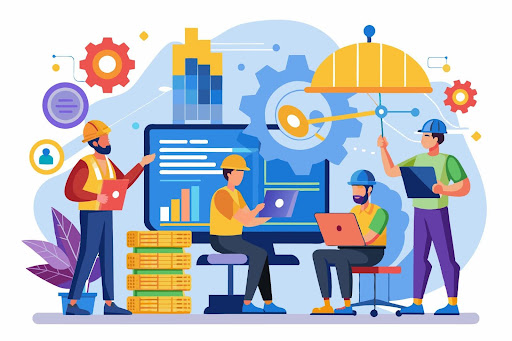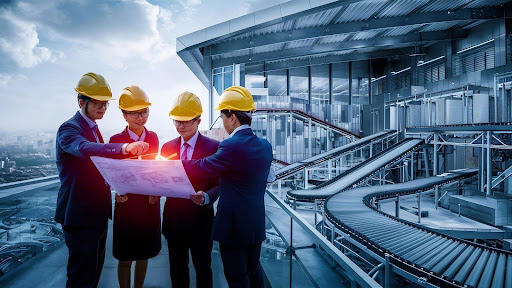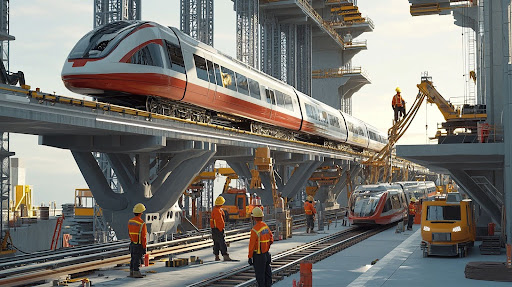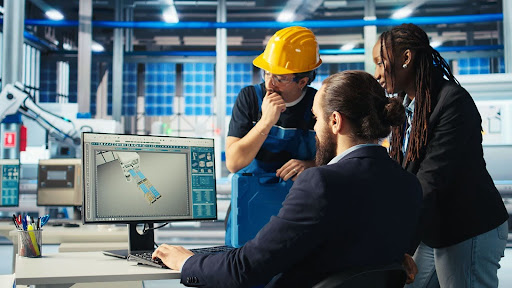
Industrial and commercial developments are complex undertakings that require multiple technical layers to work seamlessly together. Engineering consulting services accompany and support the project at every phase, from initial planning to extended operation, to help make informed decisions and handle the complexity of the project. These services emphasize safety, efficiency, compliance, and performance, thus giving assurance that the projects are not only technically sound but also free from unnecessary complications.
Structural and Civil Engineering Involvement
Structural and civil engineering are the two services that form the ground for any type of project, be it industrial or commercial. Engineers assess the site conditions and the load requirements of the structure so that stability and safety are ensured in the long run.
The essential points generally are:
- Design of structural systems for buildings and plant facilities
- Foundation assessment based on soil and load conditions
- Coordination with architectural and operational layouts
- Design features for heavy machinery and dynamic loads
This information ensures that structures are capable of withstanding the operational stresses and at the same time complying with the regulations.
Mechanical, Electrical, and Hydraulic Systems
Mechanical, electrical, and hydraulic (MEH) services are concerned with the components that make a machine or a facility work effectively. These three fields are closely integrated and require careful coordination during the design and construction phases.
Some of the most common areas that are focused on include:
- Heating, ventilation, and air conditioning systems
- Electrical power distribution and lighting layouts
- Fire protection and life safety systems
- Water supply, drainage, and hydraulic infrastructure
If done correctly, these systems become the main support of a business in terms of operational efficiency, safety, and ease of maintenance.
Digital Tools and Coordination in Modern Engineering Projects
Digitally enabled systems have become the core framework of modern industrial and commercial projects mainly because of their ability to deliver high-level accuracy and coordination. To that end, engineering consultants are progressively adopting building information modelling (BIM), digital simulations, and coordinated documentation as a means to minimise the interdisciplinary clashes.
These tools enable the involved parties to actually fathom the intricacies of the systems at a preliminary stage, detect the design conflicts that are ostensibly going to arise in the absence of the starting construction, and strengthen the communication lines that exist between the various stakeholders. Consequently, projects are getting out of these investments with clearer documentation, fewer site changes, and greater conformity between the design intent and on-site execution.
Technical Advisory and Mid-Project Support
Often, beyond the initial design stages, engineering consulting services are also present. These services provide excellent support for the decision-making that takes place during feasibility, upgrades, or project reviews. In the middle stages of development, engineering consulting services are crucial in risk identification, design conflict resolution, and constructability assessment.
Typical advisory inputs are:
- Feasibility and option studies
- Independent design reviews
- Technical due diligence for existing assets
- Risk and value engineering assessments
Such guidance aids project stakeholders in retaining technical clarity as their projects develop.
Compliance, Safety, and Regulatory Alignment
Industrial and commercial projects are obliged to comply with strict regulatory and safety standards. Consulting engineers, through interpreting the codes, preparing the documentation, and coordinating the approvals, help in this respect.
Such assistance typically involves:
- Building code and standards compliance
- Workplace health and safety considerations
- Fire and emergency system coordination
- Environmental and planning requirements
By taking the compliance measures as a step forward, approval delays are shortened, and safer project delivery is facilitated.
Long-Term Asset Performance Considerations
Often, engineering input is beyond construction. Consultants evaluate how systems and structures will age, thus helping the planning of maintenance and the consideration of future upgrades. From the perspective of CSA Engineering, technical foresight integration at the beginning stages makes engineering consulting services contributors to safer facilities and more resilient assets throughout their lifecycle. In this wider frame, areas like the structural engineering consultants, building services engineering, industrial engineering solutions, and commercial engineering design are naturally coordinated and informed project delivery aligned.