In a world driven by innovation, it is often through the harmonious blend of creativity and rigorous engineering that ideas truly take flight and become tangible products. Several companies have approached us with a singular inquiry: what fundamentally distinguishes industrial design from product engineering, and how does industrial design in Melbourne integrate into this scenario? Though the two fields often overlap, they have substantially different objectives. As a team, being aware of these distinctions results in better decision-making, lower development risk, and an easier transition from concept to market.
Understanding Industrial Design at Its Core
Industrial design is primarily concerned with the product’s appearance, tactile experience, and connection with the user. It is a mixture of design principles, ergonomics, and user friendliness that influences not only the external product design but also the overall customer experience. The focus of this work is not only on the look of the product, but it also aims at making it intuitive, practical, and compatible with the way people use it in their everyday lives.
Industrial designers analyze and assess such factors as:
- User behaviour and interaction
- Aesthetic appeal and brand alignment
- Ergonomics and comfort
- Materials and surface finishes
The focus here is on the design of a product that people want to pick up, use, and trust. Industrial design answers the question: How should this product look and feel to succeed in the market?
What Product Engineering Really Involves
Product engineering is the process that starts with a designed concept and ends with a product that is able to function, be manufactured, and meet the requirements. This area of technology concerns itself with how well the product will function, how long it will last, whether it is safe, and whether it is technically feasible. The engineers who take the product through this stage of development are the ones who produce the most efficient methods of production, ensure the reliability of the results, and tensure hat the product meets industry standards.
Key aspects of product engineering include:
- Structural integrity and material performance
- Mechanical and electrical functionality
- Manufacturing feasibility and cost optimisation
- Compliance with Australian and international standards
Industrial design is what attracts users and makes the product easy to use. Product engineering, on the other hand, is the discipline that verifies the product actually works under real conditions.
How the Two Disciplines Differ in Practice
Industrial design and product engineering are often intertwined. But these two areas have different priorities.
- Industrial design is a user-driven process. The features that matter most to users, such as appearance, comfort, and emotional response, are what guide decisions. To establish the form and user interaction, the team often creates sketches, visualisations, and early mock-ups.
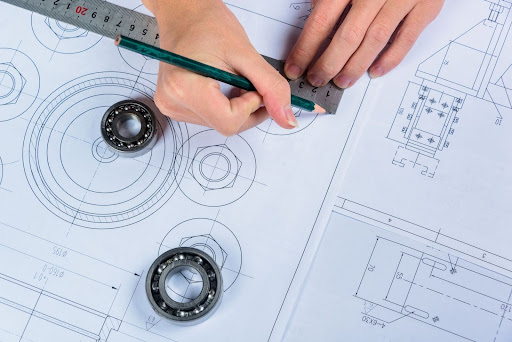
- Product engineering is mostly about confirming the performance in a rigorous way. The team uses calculations, simulations, and testing to make decisions. Technical drawings, material specifications, and engineering validations are the predominant parts of this phase.
In short, industrial design determines what the product will be, while product engineering determines how the product will work and be built.
Where the Two Meet in Real Projects
Successful products rarely rely on just one discipline. Most of the time, the best results are achieved when industrial designers and engineers work together from the very beginning. Such an integrated approach reduces the need to rework, reduces the development time, and increases the quality of the final product.
In our experience, projects that regard design and engineering as two separate silos often encounter difficulties in the later stages, such as:
- Designs that are difficult or costly to manufacture
- Engineering solutions that compromise user experience
- Delays caused by late-stage design changes
This is the reason why, particularly in complex development projects involving industrial design in Melbourne, it is crucial to have close coordination of form and function from the very first day.
The Role of Prototyping and Validation
Prototyping is an essential part of both industrial design and product engineering. However, it is used for different purposes in each case.
- Industrial design prototypes help evaluate aesthetics, ergonomics, and user interaction.
- Engineering prototypes focus on performance testing, durability, and compliance.
Whether physical or digital, prototypes provide an opportunity for the teams to pinpoint problems, validate their assumptions, and iterate on their designs without the risk of a production commit. This stage is crucial for minimising risk and ensuring the final product performs as expected.
Manufacturing Considerations: A Key Point of Difference
Another major difference between the two is that of manufacturing responsibility. Industrial designers may take manufacturing constraints into account, but product engineers are the ones who make sure that the product is produced efficiently and consistently.
This involves:
- Choosing the most appropriate manufacturing methods
- Designing the product for easy assembly and maintenance
- Taking care of tolerances and material behaviour
- Helping suppliers during the production ramp-up
Without sufficient engineering input, a visually appealing product may not necessarily go beyond the factory floor.
Why Clarity Between Design and Engineering Matters
Knowing the differences between industrial design and product engineering allows companies to allocate their resources more effectively. It ensures that the right people work on the right stage and that the requirements from each field are reasonable.
Products benefit from the collaboration when both fields are clearly defined yet closely aligned:
- Strong user appeal
- Reliable technical performance
- Smoother manufacturing transitions
- Faster time to market
This equilibrium is what turns groundbreaking ideas into commercially viable products.
Designing with Purpose, Engineering with Confidence
Designing with purpose and engineering with confidence is exactly how CSA Engineering operates. It is through creativity and technical precision that the informed decisions and disciplined collaborations, which are the trademarks of CSA Engineering, lead to outstanding products. It is essential to know the difference between industrial design and product engineering, in any case, whether it is simplifying a new idea or getting a product ready for manufacture.
Companies that seek a well-balanced, end-to-end approach to industrial design in Melbourne can be certain of an experienced team like CSA Engineering to deliver form and function as two sides of the same coin. We bring in our capabilities in product engineering services, mechanical engineering design, prototyping and testing, manufacturing support, CAD design services, and compliance engineering in Australia to make the product journey with clarity, confidence, and long-term value.