Changes in the way people and goods move are occurring more rapidly than ever. Rapid urbanization, climate change, and advanced infrastructure development technology mark the emergence of an age of transport engineering. From technical and planning knowledge to futurism, transport engineering is committed to the development of the safest and most efficient modes of transport.
Smarter and Data-Driven Infrastructure
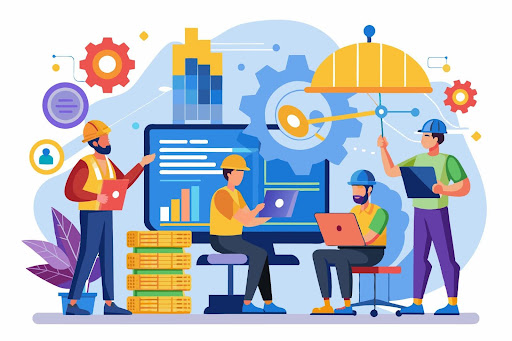
One of the major industries shaping developments is undoubtedly the integration of data analytics and the utilization of smart systems. The design of transport networks is no longer primarily based on expected traffic volumes. Hence, with the real-time data collected from sensors, GPS tracking, and smart devices, engineers now have the capability to monitor patterns and adjust systems dynamically.
Smart traffic lights, prediction modelling software, and computer simulations of traffic not only help reduce congestion but also improve road safety. By the use of advanced modelling software, planners are even capable of simulating various traffic scenarios before any changes in infrastructure are carried out. Such a progressive practice greatly reduces the risk and guarantees the functionality and efficiency of the transport systems for a more extended period.
Sustainability as a Core Priority
Environmental responsibility is no longer optional. Today, engineers are incorporating the principles of sustainability in the architecture of the whole lifecycle of projects from conception, planning, and implementation stages. It essentially means lowering carbon footprint, making mass transit popular, and shifting the focus onto active travel, such as walking and cycling.
Nowadays, roads and other infrastructures are being designed with an increasing number of features such as:
- Bicycle lanes and walkways are at the forefront
- The provision of Electric Vehicle (EV) charging stations
- The utilization of recycled and environmentally-friendly construction materials
- Environmentally-friendly rainwater disposal and management systems
By focusing on greener solutions, the industry supports broader climate goals while improving the quality of life in urban areas.
Integration of Multimodal Transport
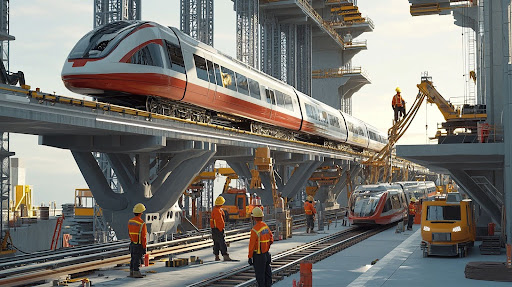
Modern cities are reducing their reliance on car-centric planning approaches and moving toward more integrated transport solutions, where buses, trains, trams, cycling routes, and pedestrian infrastructure are integrated with each other. Proper transport engineering ensures there is integration between these approaches, not each mode being treated individually.
Multimodal planning ensures easy access, less congestion, and more convenience for the users. Besides, it meets the aim of inclusive mobility, assuring the safe movement of people of all ages and abilities in urban cities. A new direction taken up by engineers in designing transport corridors is to make them connected and flexible to meet future growth.
Technology-Driven Project Management
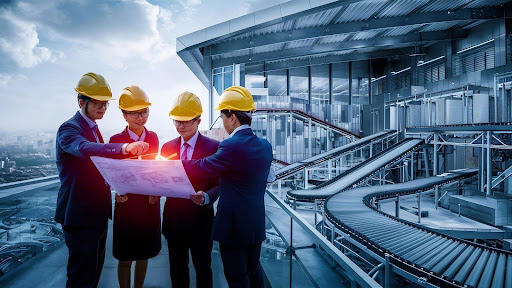
Technology not only has an impact on design but also on the means of project delivery. Building Information Modelling (BIM) and other digital platforms facilitate integrated planning and coordination among different disciplines. Engineers, architects, and contractors can work from shared digital models, improving coordination and reducing costly errors.
Moreover, automation and AI are being employed to make the process of traffic analysis and infrastructure evaluations more efficient. These technologies provide experts with the ability to analyze vast amounts of data in a short time and base their decisions on solid evidence.
Resilience and Future-Proofing
Climate change and weather events highlight the need for resilient infrastructures. These infrastructures, including transport routes, are supposed to withstand such occurrences as floods, heat waves, and heavy rainfall without serious disruptions. Engineers are adopting new technologies that aim to improve such facilities as roads, bridges, and drains.
Similarly, future-proofing shall also include other upcoming trends of autonomous vehicles and electric mobility. This means that infrastructure would be sufficiently adaptive to support future technology while keeping its safety characteristics at desired levels.
Shaping Tomorrow’s Mobility Landscape
The future of transport engineering is essentially about balancing innovation with responsibility. With the increasing complexity of infrastructure requirements, the sector is expected to continuously merge technology, sustainability, and community-centric planning. The introduction of smart mobility solutions and the creation of resilient infrastructure through innovative strategies are dramatically changing the functioning of transport systems.
From our perspective, at CSA Engineering, keeping up with the evolution of our industry revolves around the acceptance of innovations in the realms of smart cities, environmentally friendly transportation, and traffic management. The transport networks of the future, achieved through a blend of technical accuracy and careful planning, will not only be safer and environmentally friendlier but also more resilient to the needs of Australian communities and those around the world.