Industrial and commercial developments are complex undertakings that require multiple technical layers to work seamlessly together. Engineering consulting services accompany and support the project at every phase, from initial planning to extended operation, to help make informed decisions and handle the complexity of the project. These services emphasize safety, efficiency, compliance, and performance, thus giving assurance that the projects are not only technically sound but also free from unnecessary complications.
Structural and Civil Engineering Involvement
Structural and civil engineering are the two services that form the ground for any type of project, be it industrial or commercial. Engineers assess the site conditions and the load requirements of the structure so that stability and safety are ensured in the long run.
The essential points generally are:
Design of structural systems for buildings and plant facilities
Foundation assessment based on soil and load conditions
Coordination with architectural and operational layouts
Design features for heavy machinery and dynamic loads
This information ensures that structures are capable of withstanding the operational stresses and at the same time complying with the regulations.
Mechanical, Electrical, and Hydraulic Systems
Mechanical, electrical, and hydraulic (MEH) services are concerned with the components that make a machine or a facility work effectively. These three fields are closely integrated and require careful coordination during the design and construction phases.
Some of the most common areas that are focused on include:
Heating, ventilation, and air conditioning systems
Electrical power distribution and lighting layouts
Fire protection and life safety systems
Water supply, drainage, and hydraulic infrastructure
If done correctly, these systems become the main support of a business in terms of operational efficiency, safety, and ease of maintenance.
Digital Tools and Coordination in Modern Engineering Projects
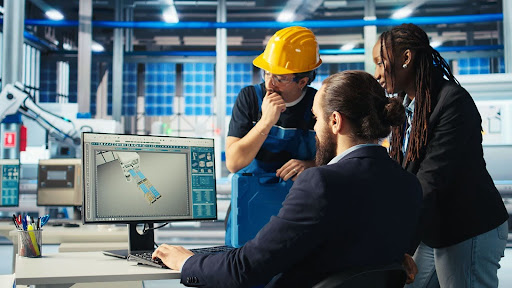
Digitally enabled systems have become the core framework of modern industrial and commercial projects mainly because of their ability to deliver high-level accuracy and coordination. To that end, engineering consultants are progressively adopting building information modelling (BIM), digital simulations, and coordinated documentation as a means to minimise the interdisciplinary clashes.
These tools enable the involved parties to actually fathom the intricacies of the systems at a preliminary stage, detect the design conflicts that are ostensibly going to arise in the absence of the starting construction, and strengthen the communication lines that exist between the various stakeholders. Consequently, projects are getting out of these investments with clearer documentation, fewer site changes, and greater conformity between the design intent and on-site execution.
Technical Advisory and Mid-Project Support
Often, beyond the initial design stages, engineering consulting services are also present. These services provide excellent support for the decision-making that takes place during feasibility, upgrades, or project reviews. In the middle stages of development, engineering consulting services are crucial in risk identification, design conflict resolution, and constructability assessment.
Typical advisory inputs are:
Feasibility and option studies
Independent design reviews
Technical due diligence for existing assets
Risk and value engineering assessments
Such guidance aids project stakeholders in retaining technical clarity as their projects develop.
Compliance, Safety, and Regulatory Alignment
Industrial and commercial projects are obliged to comply with strict regulatory and safety standards. Consulting engineers, through interpreting the codes, preparing the documentation, and coordinating the approvals, help in this respect.
Such assistance typically involves:
Building code and standards compliance
Workplace health and safety considerations
Fire and emergency system coordination
Environmental and planning requirements
By taking the compliance measures as a step forward, approval delays are shortened, and safer project delivery is facilitated.
Long-Term Asset Performance Considerations
Often, engineering input is beyond construction. Consultants evaluate how systems and structures will age, thus helping the planning of maintenance and the consideration of future upgrades. From the perspective of CSA Engineering, technical foresight integration at the beginning stages makes engineering consulting services contributors to safer facilities and more resilient assets throughout their lifecycle. In this wider frame, areas like the structural engineering consultants, building services engineering, industrial engineering solutions, and commercial engineering design are naturally coordinated and informed project delivery aligned.
Modern infrastructure, buildings, and industrial projects are extremely complicated underneath their polished facade. The layers of complexities range from technical accuracy to regulatory compliance, and every single one of these decisions eventually has long-term consequences. This is exactly the point where engineering consultants can be of great help by providing structured expertise, which ensures that projects proceed with clarity, safety, and most importantly, efficiency.
Informed Decision-Making from the Start
The most prominent benefit of professional consultants is undoubtedly the vast knowledge they possess, which can be very valuable in the early stages of planning. The entrance evaluations help to identify constraints related to site conditions, regulations, and feasibility. So instead of dealing with the consequences of the problems later, project teams have the opportunity to make informed decisions right at the beginning.
Consultants usually support:
Feasibility studies and concept development
Risk identification before construction begins
Clear documentation that aligns with stakeholders
Getting the initial help not only diminishes the feeling of uncertainty but also establishes a solid technical groundwork for the whole project lifecycle.
Technical Accuracy and Compliance
Engineering projects that are the subject of implementation requirements must meet very stringent standards and codes, and these necessarily vary from region to region as well as from project to project. Seasoned consultants are always in tune with the current regulations and best practices, so they make sure that the designs are not only innovative but also compliant.
Engineering consultants can be considered as the technical checkpoint that a project is halfway through. They assess the calculations, drawings, and methodologies to verify that everything is in harmony with the safety and performance requirements. This completely independent verification is thus a vehicle for fewer errors, less rework, and the avoidance of possible legal issues later.
Cost Control Without Losing Quality
In many cases, the assumption that consultants raise costs is proven wrong. Their involvement actually leads to better financial outcomes. Through optimizing designs and advising on efficient materials or systems, consultants play a vital role in balancing performance and budget.
Some of the ways they bring value include:
Design changes were reduced during construction
Delays caused by technical oversights were eliminated
Coordination between disciplines is enhanced
Moreover, if the resources are wisely used from the start, the operational and maintenance costs in the long run will also be manageable.
Clear Communication Across Teams
Big projects require the collaboration of architects, contractors, authorities, and clients, each with their own technical language. Professional consultants can be considered as connectors among these groups. They decode complex engineering concepts into simple, understandable, and actionable pieces of information, which in turn help everyone be on the same page.
This teamwork speeds up the timelines, reduces misunderstandings, and makes it easier to get approvals from the regulatory bodies.
Long-term Performance and Sustainability
Furthermore, consultants think about how a building or a system will work, not only during the period of construction, but also over time. They consider factors such as durability, adaptability, and environmental impact while evaluating. The engineering decisions made today with careful consideration will be safer, more efficient, and more user-friendly in the future.
By prioritizing whole-life performance, the projects become more capable of dealing with future demands, upgrades, or changes in use.
A Perspective Grounded in Responsible Practice
According to CSA Engineering, the involvement of engineering consultants doesn’t just mean the technical delivery. It requires responsible planning, practical problem-solving, and collaboration, which lead to safer and more resilient outcomes. Thoughtfully applying the expertise not only strengthens project management but also results in reliable structural engineering services, effective risk management, and improved sustainability in the built environment.
The world of engineering is going through a dramatic shift, underpinned by emerging technology, rising environmental expectations, and changing client needs. As we move further into 2025, the work of the engineering consultant is more important than ever before. The consultants are not just required to provide technical solutions but are also required to drive innovation, sustainability, and digital change initiatives across sectors.
Growing Need for Green Solutions
Sustainability is no longer a choice; it’s a requirement. Clients are now more focused on environmentally friendly infrastructure and operations. This paradigm is altering the manner in which engineering consultants handle projects, from choosing sustainable materials to incorporating energy-efficient systems and minimizing carbon footprints. Consultants in 2025 need to be knowledgeable about green certifications, life cycle assessments, and sustainable design standards in order to satisfy regulatory and societal needs.
Integration of Digital Twins and Smart Technologies
One of the most influential innovations transforming engineering consulting is the use of digital twins. These virtual copies of physical assets enable real-time monitoring, testing, and optimisation of infrastructure across its lifecycle. When combined with the Internet of Things (IoT) and artificial intelligence (AI), digital twins improve predictive maintenance, enhance design accuracy, and optimise performance. An innovative engineering consultant incorporates these tools into their process, providing clients with data-driven insights and enhanced decision-making capabilities.
The Role of Artificial Intelligence and Automation
AI continues to develop, introducing automation and efficiency to many engineering operations. From safety analysis and design simulations to project scheduling and cost estimation, AI-powered tools assist consultants in making processes more efficient, minimizing human error, and providing quick results. In 2025, engineering consultants who use AI have a better chance of remaining competitive and providing high-value services beyond the conventional boundary of engineering.
Remote Collaboration and Global Talent Access
The pandemic-induced move to remote work has irreversibly altered the consulting environment. In 2025, engineering companies will continue to adopt cloud-based platforms and collaboration tools that enable seamless project delivery across geography. The trend also helps companies access global talent, building expert teams for specialized projects. The outcome is quicker project delivery, lower costs, and wider expertise for clients.
Increased Emphasis on Resilience and Risk Management
With a world that is being increasingly threatened by climate change and geopolitical uncertainty, engineering projects need to be built with resilience. Clients are seeking consultants to integrate risk analysis, scenario planning, and resilient infrastructure into their bids. Not only do they guarantee compliance and safety, but they also safeguard long-term investments. An expert engineering consultant acts as a strategic advisor, positioning clients ahead of the game in safeguarding their projects from unexpected disruption.
Tailored and Client-Focused Services
Those days of generic engineering solutions are over. Clients today demand bespoke consulting services that meet their individual business objectives and issues. Whether designing innovative solutions, implementing new technologies, or responding to ESG objectives, engineering consultants need to adopt a complete approach to project planning and delivery. Knowing the client’s business, market conditions, and future vision is crucial to establishing solid, long-term relationships.
Cross-Disciplinary Collaboration
Engineering consulting is no longer limited to old silos. Projects are increasingly calling for contributions from several disciplines like software development, environmental science, data analytics, and supply chain management. In 2025, engineering consultants are ready to work across domains, combining different expertise to provide holistic solutions. Collaboration of this kind is key to addressing intricate issues and promoting innovation.
Conclusion
As we continue through 2025 and beyond, the work of the engineering consultant is evolving into that of an innovation-driven, sustainability-oriented problem-solver. Those who adopt a culture of innovation, leverage digital technology, and adjust to changing client requirements are leading the way in creating the infrastructure and industries of the future.
At CSA Engineering, we remain at the forefront by anticipating future trends in our consulting approaches. Our passion for excellence, innovation, and client-centric solutions guarantees that we are a partner of choice for intricate engineering solutions in an evolving world.
As urban populations grow and technology advances, the demand for intelligent, resilient, and sustainable infrastructure has never been more acute. Cities are becoming smarter, industries are becoming more complex, and the environment is directing the way we construct. With the fast-paced world we are living in today, engineering consulting services have become the key to steering infrastructure development toward the future’s demands.
The Changing Face of Infrastructure
Infrastructure nowadays is not only about roads, bridges, and utilities. It’s about infusing cutting-edge technology, becoming energy-efficient, and taking long-term social and environmental factors into account. Whether it’s green building design, smart transportation systems, or grid modernization, infrastructure projects today need holistic planning, multidisciplinary expertise, and accurate implementation. That’s where engineering consultants come in—not as mere advisors, but as strategic partners who assist in the development of long-term solutions.
Engineering Consultants’ Key Roles in Future Infrastructure
1. Facilitating Sustainable Design
Due to increasing concerns regarding environmental sustainability, infrastructure is now required to meet tighter environmental standards and sustainability targets. Engineering consultants use green technologies, green materials, and sustainable construction practices to reduce carbon footprints. By optimizing energy usage and water consumption in their designs, they assist clients in future-proofing their projects while ensuring environmental compliance.
2. Embedding Advanced Technology
Future-proof infrastructure is digital by nature. Engineering consulting services usually entail the installation of intelligent technologies like sensors, IoT systems, AI-based analytics, and automation. Consultants assist clients in making the right technology choices and integrating them into infrastructure systems, increasing operational effectiveness and lowering costs in the long run.
3. Managing Complex Projects with Precision
Major infrastructure projects tend to have numerous stakeholders, tight deadlines, and rigid budgets.Engineering consultants introduce formal project management techniques to the project, with each phase of development, from feasibility studies to construction supervision, carried out with precision. Their technical guidance assists in reducing risks, preventing expensive delays, and upholding quality levels.
4. Overcoming Regulatory and Compliance Issues
Each infrastructure project must meet a host of regulatory standards, safety guidelines, and government approvals. Engineering consultants are well-versed in navigating these challenges. They ensure that projects comply with local building codes, environmental laws, and industry best practices, which is vital to avoid legal complications and costly modifications down the line.
5. Enhancing Resilience and Future-Proofing Infrastructure
The infrastructure of today needs to be robust enough to weather the uncertainties of tomorrow—be it climate change, population expansion, or quick technological changes. Consultants offer strategic advice on materials, designs, and systems that increase the strength and flexibility of infrastructure. They assess risks and recommend proactive measures that ensure long-term resilience.
Why Engineering Consultants are Indispensable Today
The worth of engineering consulting services is that they can merge technical acumen with strategic vision. They don’t merely design buildings—they design solutions. Their multidisciplinary strategy bridges the gap between engineering innovation and practical implementation. Furthermore, consultants provide objective, third-party opinions that enable clients to investigate new possibilities and make cost-effective choices.
Their engagement also enables in-house engineering groups or developers to concentrate on core business activities while entrusting technical complexities to experts. From initial planning and risk assessment to procurement and post-construction inspection, consultants provide a single point of contact for end-to-end project delivery.
Looking Ahead: The Future of Infrastructure
The infrastructure of the future needs to be smart, sustainable, and socially inclusive. It needs to accommodate new forms of mobility, resist climate events, and serve diverse populations. As these demands increase, so does the engineering consultant’s role. They are the designers of innovation—leading industries, governments, and developers towards infrastructure that not only complies with today’s requirements but also foresees future needs.
Their work is no longer confined to structural analysis and technical plans. It is about molding the manner in which individuals live, travel, and interact. As infrastructure develops further, engineering consultants will be at the center of this revolution.
Conclusion
In an age where infrastructure has to keep pace with rapidly evolving needs, collaboration with specialists is the way forward. With their range of abilities in designing, ensuring compliance, managing risks, and bringing technology onboard, engineering consulting services play a crucial role in constructing future-proofed infrastructure. Firms such as CSA Engineeringare spearheading this revolution by bringing innovative and customized solutions to aid sustainable, resilient, and efficient infrastructure development across sectors.
Engineering projects are responsible for designing contemporary infrastructure, industries, and communities. Nevertheless, these projects tend to have profound environmental effects, such as resource depletion, pollution, and destruction of habitats.
In order to reconcile development with environmental stewardship, an engineering consultant facilitates the incorporation of sustainability into project planning, design, and implementation. By providing creative solutions and strategic planning, engineering consultants ensure that all projects make the world a greener place while achieving functional and economic objectives.
Understanding the Environmental Impact of Engineering Projects
Engineering projects, whether related to construction, manufacturing, or transportation, can impact the environment in several ways:
1. Consumption of Resources
Projects involve vast quantities of raw materials like concrete, steel, and wood, which results in the depletion of natural resources. Over-extraction and processing of these resources pollute the environment.
2. Use of Energy and Carbon Footprint
Heavy equipment, transportation, and industrial processes use huge amounts of energy, primarily from fossil fuels. This produces a lot of carbon emissions, which are responsible for global warming.
3. Generation of Waste
Construction and industrial work generates huge amounts of waste, such as toxic substances. If they are not managed, they end up contaminating land and water bodies.
4. Habitat Loss and Loss of Biodiversity
Massive infrastructure developments, like highways, dams, and cities, tend to result in deforestation and natural habitat loss, endangering biodiversity.
5. Water Use and Pollution
Construction and operational processes in engineering projects need a significant amount of water usage. Poor disposal of wastewater can pollute rivers, lakes, and groundwater bodies, affecting ecosystems as well as the health of human beings.
How Engineering Consultants Promote Sustainability
An engineering consultant plays a vital role in mitigating these environmental impacts by integrating sustainable practices into every phase of a project.
Sustainable Design and Planning Engineering consultants emphasize creating environmentally friendly projects that reduce harm to the environment. They implement energy-saving materials, reduce land use, and utilize renewable sources of energy in order to build environmentally sustainable infrastructure.
Implementation of Green Technologies Advancements in green technology help reduce the environmental footprint of engineering projects. Consultants recommend the use of solar panels, wind energy, and smart grids to reduce reliance on fossil fuels. They also promote energy-efficient lighting, water recycling systems, and environmentally friendly construction techniques.
Environmental Impact Assessments (EIA) Prior to project implementation, engineering consultants undertake Environmental Impact Assessments (EIA) to assess possible environmental hazards. EIA assists in the identification of sustainable options, compliance with regulatory requirements, and reducing ecological harm.
Waste Reduction Strategies Sustainable engineering focuses on reducing, reusing, and recycling materials to minimize waste production. Consultants implement advanced waste management systems, promote circular economy principles, and encourage the use of recycled materials in construction.
Water Conservation Measures Engineering consultants incorporate water-saving technologies such as rainwater harvesting, greywater recycling, and efficient irrigation systems. These solutions help reduce water consumption while ensuring sustainable water management.
Eco-Friendly Transportation Solutions Eco-friendly transport infrastructure is important for lowering carbon footprint. Consultants encourage public transport initiatives, pedestrian-based urban design, and electric car charging points to promote green mobility solutions.
Climate-Resilient Infrastructure With climate change posing significant risks, engineering consultants design structures that can withstand extreme weather conditions. Flood-resistant buildings, sustainable drainage systems, and resilient urban planning help communities adapt to environmental challenges.
Collaboration with Environmental Experts Sustainability calls for a comprehensive approach involving engineers, environmental scientists, and policymakers. Consultants engage different stakeholders to create solutions that are feasible and environmentally conserving.
The Future of Sustainable Engineering
With mounting environmental issues, sustainability in engineering is gaining top priority. Rising trends like smart cities, carbon-neutral buildings, and cutting-edge AI-based sustainability solutions are shaping the sector. With the support of an engineering consultant, enterprises and governments alike can make sure that their ventures are in compliance with international sustainability objectives while keeping pace with current infrastructure needs.
Conclusion
Engineering projects heavily impact the environment, but if they are addressed through proper strategies, their destructive aspects can be negated. Sustainable design, using green technology, and complete environmental analysis can reduce the impact of engineering projects on the environment, and all these are carried out by engineering consultants.
CSA Engineering deals in delivering specialist consultancy services and assists businesses and industries in bringing sustainability to their projects without affecting efficiency or complying with the norms of environmental safety.
Choosing the right engineering consultant for heavy lift and transport projects is crucial to ensure safety, efficiency, and project success. With complex operations involving oversized loads, specialized equipment, and intricate logistics, these projects demand a consultant with deep expertise and an innovative approach. Whether you’re moving heavy machinery, structures, or industrial components, the right consultant will help minimize risks, reduce costs, and ensure timely completion.
In this blog, we’ll explore essential tips for selecting an engineering consultant to handle the unique challenges of heavy lift and transport engineering effectively.
1. Experience in Heavy Lift and Transport Engineering
Heavy-lift and transport projects are highly complex and, consequently, require specialized skills. Try to find experts with broad experience in similar tasks so they can better know the specific hazards, safety regulations, and technical requirements of such projects. Ask for case studies or references demonstrating success in managing large-scale, high-risk engineering tasks.
An experienced consultant will also be abreast with the latest equipment, techniques, and developments in the industry. You must design and plan lifts that are oversized or complex and seek solutions to extremely challenging transport scenarios such as rugged terrain, tight spaces, or high-risk areas.
2. Full Services
A good engineering consultant should be in a position to give all the scope of services entailed in heavy lift and transport engineering. These include preliminary studies, project management, route surveys, and load analysis. They range from feasibility to plan development and on into the execution, with the assurance that it will be a smooth process from start to finish.
Full-service solution providers can save you from the hassle of dealing with vendors. They will minimize misunderstandings and consequent delays involved in dealing with various vendors. Ensure that full-service providers have an understanding of compliance with local regulations and safety standards to ensure that legal and operational issues, which may arise at the project’s current or final stages, are nil.
3. Technical Expertise and Innovation
The heavy lift and transport market continuously evolves with improvements in technology and equipment. Choose a consultant who not only has technical expertise but is also holding the innovation. He should be able to suggest the best equipment, devise innovative rigging plans, and use state-of-the-art technology to optimize efficiency.
High-tech solutions, like CAD software or 3D simulation, maybe the most precious to a consultant when needed in work to design the most minute plans for lifting and transport. The risk is actually reduced while the precision increases. New solutions mean less downtime, reduced cost, and more chance of achieving the project outcome.
4. Safety in Focus
Operations generally require safety in their heavy lift and transport operations. A consultant engineer should take proper care of safety procedures, risk assessment, and mitigation procedures. He should also be abreast of the latest industry standards in safety and make sure that his team members have proper training in safety procedures.
Assess their safety record by checking on past projects and asking about the type of safety measures they use. Good planning of safety not only keeps people safe but also good equipment and cargo as well, saving it from heavy damage or accidents that could cost lots of money.
5. Communication and Collaboration
Typically, heavy-lifting and transport projects will require collaboration from engineers, construction teams, and logistics providers. So, being an effective consultant in terms of communication and teamwork will be of crucial importance in having all the parties on the same page and working toward a common goal.
Open and transparent communication prevents misunderstandings and ensures that every stage of the project is run effectively. Therefore, it is necessary to choose a consultant who will update regularly on progress and respond to all queries regularly. Efficient collaboration between the supplier and the consultant would then lead to effective decision-making and prompt resolution of issues, thus improving the whole process.
6. Record of Dependability
Choosing an engineering consultant may best depend on reliability. One needs an engineering consultant who can get the job done on time and within budget. Results delayed, or cost overruns, can really place a dent in the general project, so make sure your consultant has met his deadlines or conformed to budget requirements.
You may research client feedback or, if possible, speak to some of your previous clients to find out about their credibility. Choose consultants who have outstanding reports regarding the successful completion of projects and how they ensure that the results reach you even under the most challenging conditions.
7. Cost Effectiveness
While cost alone should not be your sole deciding factor, it is essential that you consider a consultant with a balance between quality service and a reasonable price. Request detailed estimates of the cost because all the costs-especially equipment rentals and additional labor-had to be covered in their estimates.
If you encounter a cheap consultant, be cautious. It may come in an imperfect compromise where quality is sacrificed, and safety or efficiency is compromised. At least you’re sure that you won’t want the cheap partner on the job who is willing to charge you a bit more but gives greater value for expertise.
Conclusion
A good engineering consultant who can carry out heavy lift and transport projects is very critical to the success of a safe operation. This choice will be dependent on factors such as experience, extensive services offered, technical expertise, safety, communication, and reliability.