Introduction
Every year, workplaces across Australia face serious incidents involving lifting equipment. Cranes collapse, hoists fail, and improperly assessed lifting gear contributes to injuries that could have been prevented. Behind each of these incidents lies a common thread: a failure to obtain proper lifting device certification before putting equipment into operation. In high-risk industries where tonnes of material move overhead daily, certification is not a bureaucratic checkbox. It is the single most critical layer of protection between a functional worksite and a catastrophic outcome.
CSA Engineering has built its reputation on helping Australian businesses navigate this exact challenge. With deep expertise in compliance, structural assessment, and industrial design, we delivers end-to-end certification services that meet the demands of modern industry.
The Growing Importance of Lifting Equipment Safety in Modern Industries
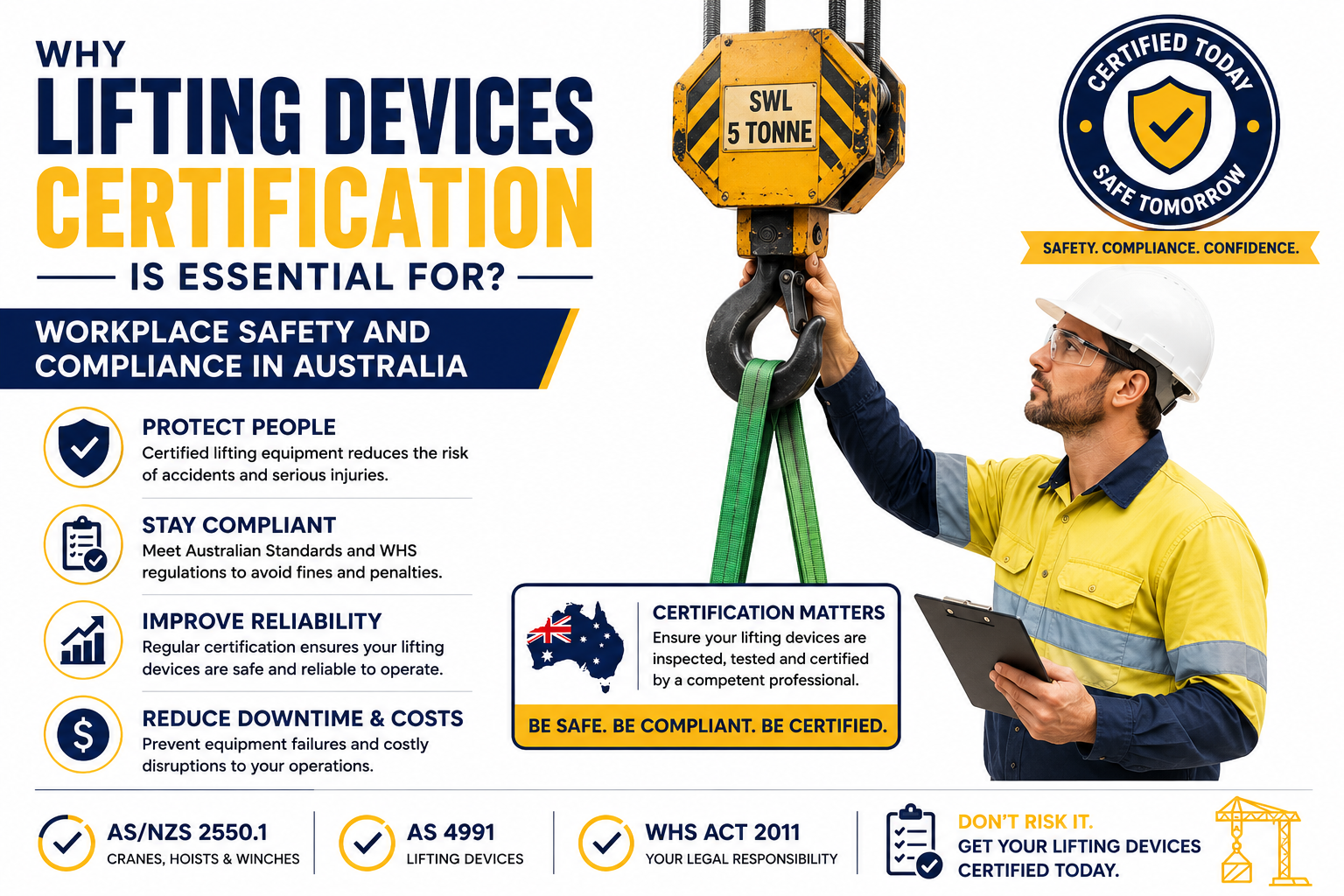
Australia’s industrial landscape has expanded rapidly. Construction towers rise higher, mining operations dig deeper, and logistics facilities move faster than ever before. With this growth comes greater reliance on complex lifting systems, and a corresponding rise in the regulatory scrutiny surrounding them. Obtaining formal lifting equipment certification is no longer optional in most sectors. Workplace health and safety legislation in Australia mandates that all plant and equipment, including lifting devices, meet defined safety standards before they are commissioned.
The consequences of non-compliance are serious. Businesses can face significant fines, forced shutdowns, civil liability, and in the most severe cases, criminal prosecution. Beyond legal exposure, the reputational damage of a preventable accident is often irreparable.
What Is Lifting Device Certification and Why It Matters
At its core, lifting certification is the formal process by which a qualified engineering authority verifies that a lifting device is structurally sound, correctly designed, and fit for its intended load capacity and operating conditions. This process involves detailed engineering assessments, load calculations, material evaluations, fatigue analysis, and in many cases physical inspection of the equipment.
What makes this process particularly important is that it creates a documented engineering record. When something goes wrong on a worksite, that certification record becomes the foundation of a legal and technical defence. Without it, businesses are left exposed. With it, they demonstrate due diligence, regulatory compliance, and a commitment to the safety of their workforce.
Understanding Lifting Equipment Certification Requirements in Australia
Australian standards governing lifting equipment draw from a combination of national legislation, state-based Work Health and Safety regulations, and published engineering standards including AS 3569, AS 4991, and AS 1418 series. Navigating these frameworks requires specialist knowledge, particularly when equipment operates across multiple jurisdictions or is custom-designed for a specific application.
A qualified lifting equipment engineer must assess whether the equipment meets these standards in terms of design, fabrication, installation, and ongoing maintenance. This is not a role for a generalist technician. It requires an engineer with demonstrated competency in structural mechanics, materials science, and Australian regulatory frameworks. we provides exactly this level of technical rigour across a wide range of lifting equipment types.
How Lifting Certification Reduces Workplace Risk and Prevents Accidents
The value of structured engineering certification extends far beyond paperwork. When a certified engineer conducts a lifting equipment assessment, they identify risks that may not be visible to the untrained eye. Weld fatigue, incorrect load paths, inadequate safety factors, and non-compliant material specifications are just some of the issues that a thorough certification assessment can uncover before they result in failure.
Certification also establishes clear parameters for equipment use. Safe working load limits, approved lift configurations, required inspection intervals, and operating environment conditions are all documented as part of the certification process. These parameters guide operators and site supervisors in the day-to-day management of lifting activities, reducing the likelihood of misuse and equipment degradation over time.
The Role of a Qualified Lifting Equipment Engineer in Compliance
Not every engineer is qualified to certify lifting equipment. Australian regulations require that assessments be conducted by engineers who hold relevant qualifications and, in many jurisdictions, formal registration. The engineering services provided by CSA Engineering are delivered by professionals who understand both the technical and regulatory dimensions of lifting equipment compliance in Australia.
A certified engineer reviews design documentation, inspects fabrication quality, evaluates operational context, and produces a formal engineering report that supports the certification outcome. This report carries legal weight and forms part of the safety case for the equipment. Businesses that engage qualified engineering professionals from the outset avoid the costly rework and compliance failures that arise from cutting corners.
Engineering Certification and Legal Responsibilities for Businesses
Under Australian law, operators of plant and equipment carry primary duty of care obligations. This means that businesses cannot simply rely on equipment suppliers or manufacturers to ensure compliance. They must independently verify that the equipment they operate meets current standards, and they must maintain evidence of that verification.
Accessing trusted engineering consulting services is one of the most effective ways to discharge these obligations. We work with businesses to establish robust compliance frameworks, including initial certification, periodic re-inspection schedules, and engineering reviews when equipment is modified or relocated. This ongoing relationship ensures that compliance does not lapse as equipment ages or operating conditions change.
Why Professional Engineer Certification Is Critical for Lifting Assessments
When a certification document is signed by an engineer, it carries the authority and accountability of that professional. This is why professional engineer certification matters so significantly in the lifting equipment context. A properly credentialled engineer staking their professional registration on a certification outcome is a very different proposition from an informal sign-off or a vendor-provided declaration.
The engineering assessment process at CSA Engineering is underpinned by this principle of professional accountability. Every certification delivered reflects the technical judgment of qualified engineers who understand what is at stake and who take that responsibility seriously.
The Value of Working with a Qualified RPEQ Engineer
In Queensland, and across several other Australian states, the regulatory framework requires that certain engineering sign-offs be provided by a Registered Professional Engineer of Queensland (RPEQ). An rpeq engineer holds formal registration with the Board of Professional Engineers Queensland and is legally authorised to perform engineering services that carry statutory weight. For lifting equipment operating in regulated environments, RPEQ registration is often a condition of approval, not simply a preference.
CSA Engineering employs and engages RPEQ-registered professionals across its certification service lines. This means that clients receive certification documentation that satisfies the requirements of Queensland regulatory bodies, government procurement processes, and major project compliance frameworks.
How RPEQ Engineers Australia Support Engineering Compliance and Safety Standards
The role of rpeq engineers australia extends beyond individual project sign-offs. These professionals contribute to the broader culture of engineering compliance by setting and maintaining standards across industries, advising on regulatory changes, and supporting businesses to build internal competency in equipment management. When CSA Engineering provides RPEQ services, it does so with a view to adding lasting value rather than simply ticking a compliance box.
This is particularly important in sectors such as mining, resources, and heavy construction, where the operational stakes are highest and the regulatory environment is most demanding. The presence of RPEQ-registered engineers in a certification chain gives project managers, insurers, and regulatory bodies confidence that the work has been conducted to the highest professional standard.
Engineering Services and Consulting Capabilities at CSA Engineering
CSA Engineering offers a comprehensive range of engineering services across industrial design, structural engineering, trailer engineering, and certification. For businesses seeking lifting equipment compliance, the firm provides initial design reviews, structural assessments, load testing support, certification documentation, and ongoing compliance advisory services.
Clients working with CSA Engineering benefit from a team that understands both the engineering fundamentals and the commercial realities of operating in competitive Australian industries. The firm’s approach to certification is practical, thorough, and oriented toward helping businesses maintain productive operations while staying fully compliant.
Industries That Benefit from Lifting Equipment Certification
The need for certified lifting equipment spans a wide range of industries. Manufacturing facilities rely on overhead cranes and hoists to move raw materials and finished goods. Mining operations depend on complex lifting systems for shaft access, ore extraction, and equipment maintenance. Construction sites use tower cranes, mobile cranes, and material hoists on a daily basis. Logistics and warehousing facilities depend on forklifts, gantry cranes, and automated storage systems.
Across all of these sectors, the requirement for rigorous lifting equipment certification is consistent. CSA Engineering has experience working with clients across all of these industries throughout Australia, providing certification services that are tailored to the specific equipment types, operating environments, and regulatory requirements of each sector.
Why Businesses Across Australia Trust CSA Engineering
Trust in an engineering certification provider is built through demonstrated technical competency, professional accountability, and a track record of delivering outcomes that stand up to regulatory scrutiny. CSA Engineering has established that trust by consistently providing high-quality lifting certification services to clients across Queensland and the broader Australian market.
The firm understands that every certification engagement represents a real business obligation. Delays in certification can halt project timelines. Incorrect certifications can create legal exposure. Working with an experienced, RPEQ-registered engineering team eliminates these risks and allows businesses to focus on what they do best.
Conclusion
Workplace safety and regulatory compliance are not competing priorities. With the right engineering partner, they reinforce each other. A properly certified lifting device is a productive asset that operates within defined safety parameters, supported by documentation that satisfies legal, insurance, and operational requirements.
If your business operates lifting equipment in Australia and you need expert support for certification, compliance assessment, or engineering review, CSA Engineering is ready to help. Our team of qualified engineers, including RPEQ-registered professionals, delivers certification outcomes you can rely on.